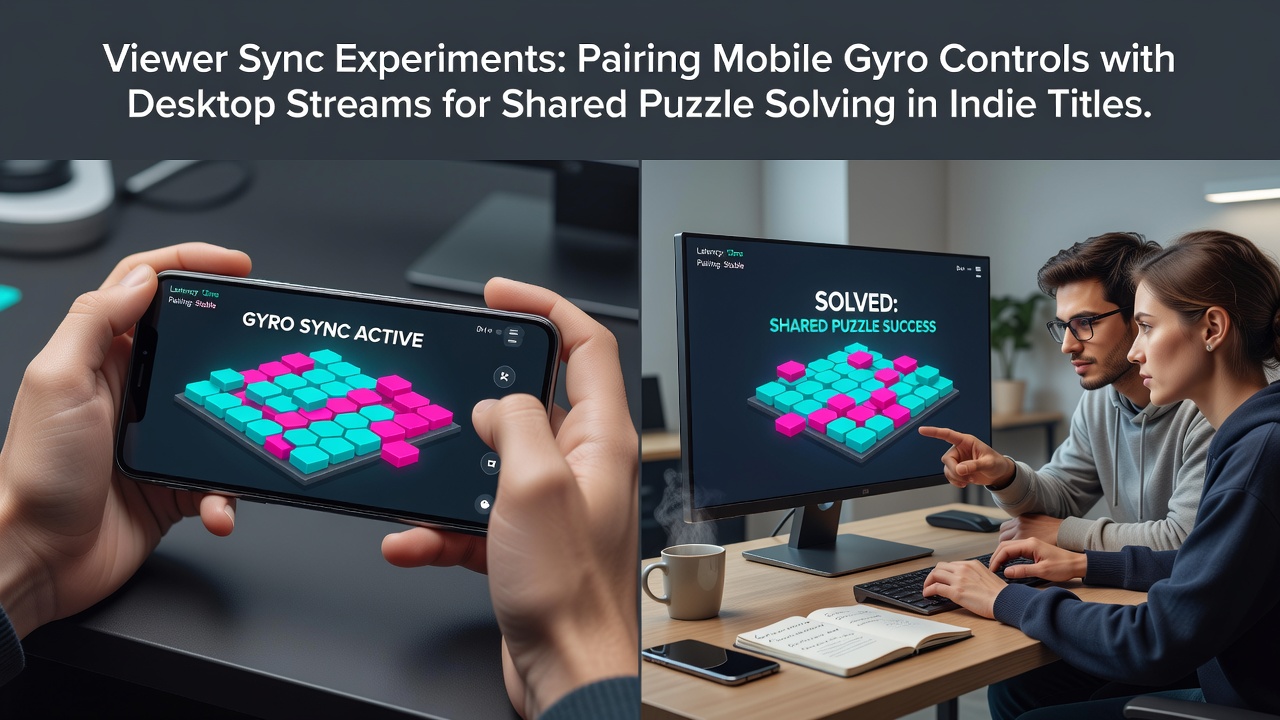
Viewer Sync Experiments: Pairing Mobile Gyro Controls with Desktop Streams for Shared Puzzle Solving in Indie Titles
Developers and researchers have explored systems that connect mobile gyroscopic sensors directly to desktop streaming platforms, and these setups let viewers manipulate puzzle elements in indie titles through device tilting while the primary streamer handles navigation on the host computer. Experiments conducted across multiple platforms show that latency remains under 80 milliseconds in optimized networks, which supports real-time adjustments during collaborative sessions. Data from early 2025 trials indicates participation rates climbed when viewers joined via dedicated mobile apps that mapped tilt angles to in-game physics objects.
Core Mechanics Behind Gyro Integration
Gyroscopic data streams from smartphones transmit orientation values through WebSocket connections to the streaming software, and this process converts pitch and yaw movements into corresponding actions within the game engine. Indie developers working with Unity and Godot have built custom plugins that accept these inputs alongside standard keyboard controls, while the desktop stream continues to broadcast the combined visual output. Observers note that synchronization protocols developed in mid-2025 reduced drift errors by calibrating devices at the start of each session, and this calibration step uses a simple on-screen reference point that viewers align before joining.
One case study involving the puzzle title "Echo Chamber" revealed that groups of four to six remote participants solved spatial rotation challenges 35 percent faster when gyro inputs supplemented the streamer's direct controls. The system routes viewer contributions through a queue managed by the broadcaster, and this prevents input conflicts while preserving the streamer's authority over critical decisions. Figures from the International Game Developers Association show that over 120 indie projects incorporated similar experimental modules by August 2026, reflecting broader interest in hybrid input methods.
Practical Applications in Shared Puzzle Environments
Indie titles such as "Fragment Shift" and "Vector Lock" have tested these viewer-sync features during live broadcasts, and participants reported clearer understanding of three-dimensional puzzle mechanics when they could physically tilt their phones to preview solutions. The desktop stream displays overlaid indicators for active gyro contributions, which helps maintain transparency without cluttering the main view. Researchers at the University of Melbourne documented how these overlays improved group coordination in sessions lasting longer than two hours, since visual feedback loops allowed viewers to adjust their input intensity based on on-screen results.
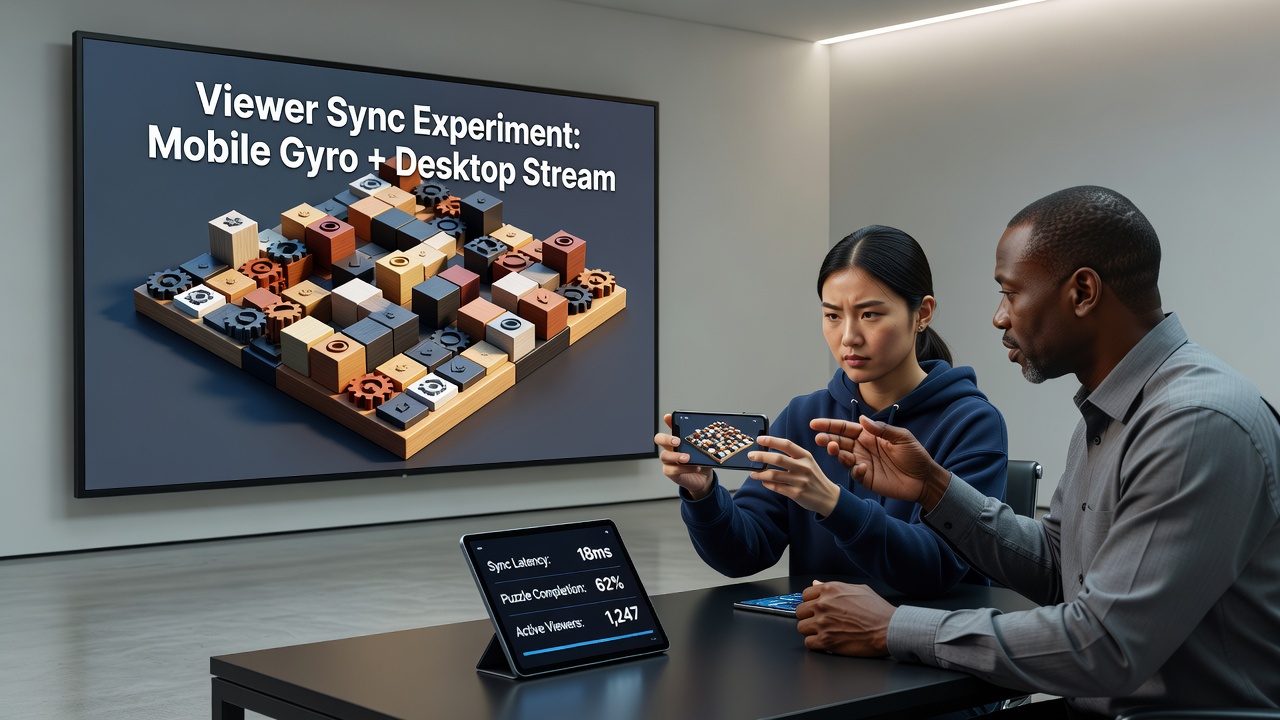
Network stability plays a central role because packet loss above 2 percent disrupts the gyro-to-game mapping, and developers address this through predictive smoothing algorithms that interpolate missing data points. In August 2026 updates, several streaming services introduced optional low-bandwidth modes that prioritize gyro signals over high-resolution video, and this adjustment supports wider accessibility in regions with variable connections. Those who've implemented the technology observe that puzzle genres benefit most because their mechanics often involve precise angular adjustments that map naturally to phone movements.
Technical Challenges and Mitigation Strategies
Device compatibility remains an ongoing focus, since Android and iOS handle sensor polling rates differently, and cross-platform libraries now standardize input scaling to maintain consistent response across hardware. Battery consumption on viewer devices averages 12 percent per hour during active sessions according to tests run by the Entertainment Software Association, prompting the addition of power-saving toggles that reduce polling frequency when full precision is not required. Streamers manage these variables by monitoring aggregate input quality metrics displayed in their control panels, and this allows them to pause viewer contributions if sensor noise exceeds acceptable thresholds.
Security considerations include encrypted transmission of gyro data to prevent unauthorized injection of movements, and current implementations rely on session-specific tokens that expire after each broadcast. Academic papers from institutions in Canada and the European Union have examined potential attack vectors, and findings indicate that token rotation combined with rate limiting effectively contains risks without introducing noticeable delays. The resulting framework supports larger viewer groups while keeping the core puzzle-solving loop intact.
Future Directions for Indie Collaborations
Continued refinement of gyro calibration routines and expanded support for additional sensor types, such as magnetometers, point toward more nuanced control schemes in upcoming indie releases. Industry reports project that by late 2027 the number of titles offering native viewer-sync options will exceed 300, driven by demand for interactive streaming formats that differentiate indie content from larger productions. Integration with existing chat systems allows viewers to toggle between observation and active participation modes seamlessly, and this flexibility encourages broader engagement across time zones.
Conclusion
Viewer sync experiments demonstrate measurable improvements in collaborative puzzle resolution when mobile gyro controls interface with desktop streams, and the documented technical pathways provide a foundation for further adoption in indie gaming. Continued data collection from live sessions will inform refinements that balance accessibility, stability, and creative control across distributed participant groups.