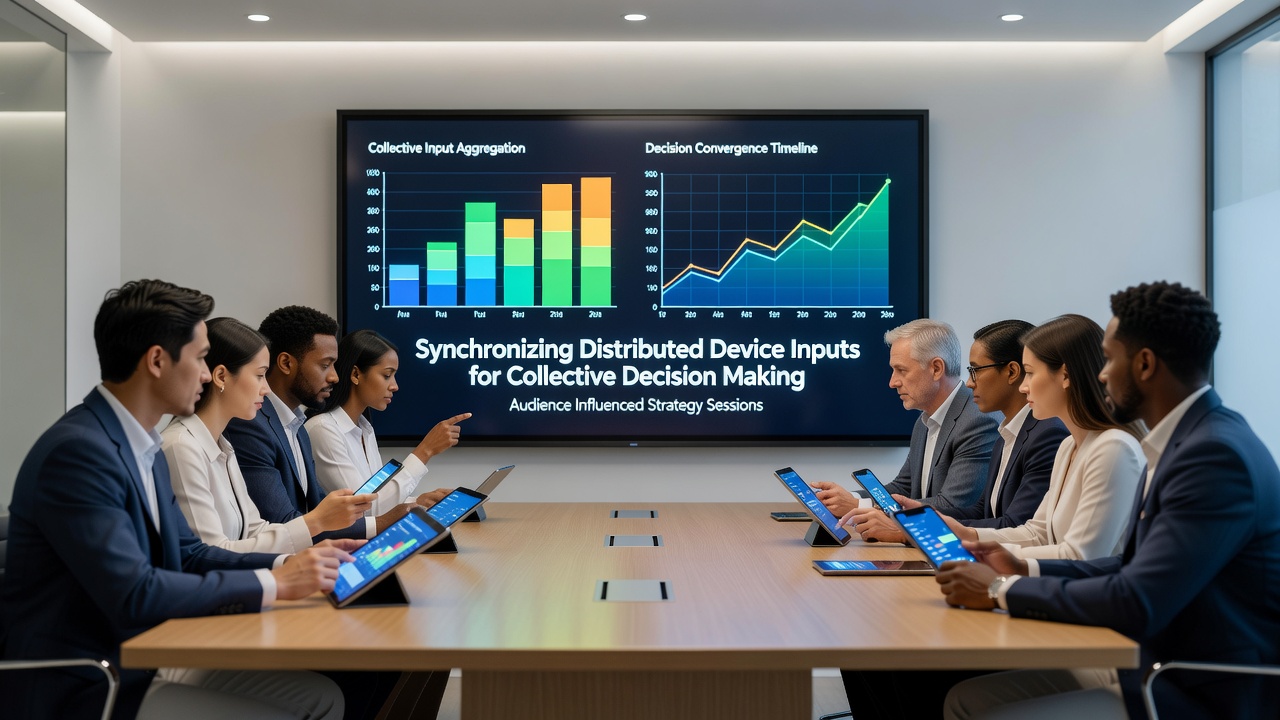
Synchronizing Distributed Device Inputs for Collective Decision Making in Audience Influenced Strategy Sessions
Distributed device inputs now form the backbone of audience participation in strategy sessions where viewers shape outcomes through synchronized commands from phones, tablets, and wearables. Systems collect signals from thousands of endpoints, align timestamps using network time protocols, and aggregate choices into unified decisions that alter game states or narrative branches in real time. Research from institutions like the University of Waterloo indicates that latency below 150 milliseconds allows effective group input without breaking immersion, while higher delays fragment collective agency.
Engineers rely on protocols such as WebRTC combined with custom middleware to handle variable network conditions across regions. Data packets carry device identifiers, input values, and sequence numbers so servers can reorder arrivals and discard duplicates before feeding results into decision engines. These engines often employ weighted voting models where engagement history or subscription tier adjusts influence, a practice documented in reports from the Entertainment Software Association.
Core Synchronization Mechanisms
Clock synchronization across devices begins with NTP or PTP references that correct drift every few seconds, after which session servers maintain a shared logical timeline. Inputs arriving out of order get buffered in sliding windows sized according to expected jitter; once the window closes, algorithms tally votes or blend continuous inputs like joystick vectors into composite actions. Observers note that hybrid models mixing majority rule for discrete choices with averaging for analog controls produce smoother transitions during extended strategy broadcasts.
Security layers encrypt payloads and validate device certificates to prevent injection attacks, while rate limiting caps submissions per account to maintain fairness. In July 2026 several platforms rolled out optional zero-knowledge proofs that let viewers confirm their input contributed to the final tally without revealing individual selections, a step that addressed privacy concerns raised in earlier deployments.
Integration with Strategy Session Platforms
Strategy titles that incorporate audience influence embed lightweight client libraries that expose input endpoints directly inside stream overlays. Viewers tap or gesture on mobile browsers while the broadcast displays aggregated heat maps and decision probabilities updated every 500 milliseconds. One deployment tracked by the Australian Interactive Games Association processed 87,000 concurrent inputs during a 90-minute session with less than 0.3 percent packet loss after implementing adaptive bitrate scaling.
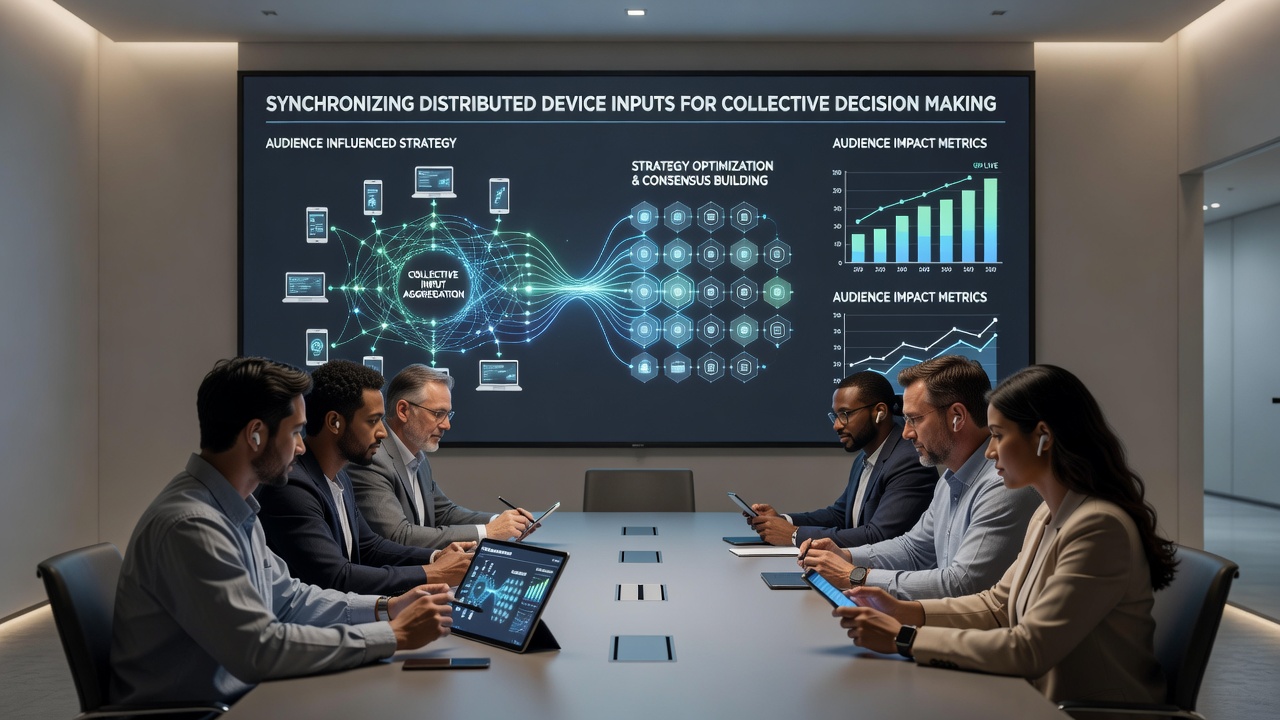
Backend orchestration uses message queues to decouple ingestion from processing, allowing horizontal scaling when participant counts spike. Developers frequently pair these queues with consensus algorithms borrowed from distributed databases so that even if regional nodes experience outages, the global decision state remains consistent. Figures from a 2025 IEEE study on multi-device gaming show that such redundancy reduced session interruptions by 41 percent compared with single-region architectures.
Performance Metrics and Edge Cases
Key performance indicators include input-to-action latency, consensus accuracy under packet loss, and participant retention after decision events. Teams monitoring these metrics report that mobile 5G connections now match wired desktop performance in urban centers, yet rural links still require aggressive prediction to compensate for 200-plus millisecond round trips. Edge cases arise when device clocks reset mid-session or when large numbers of viewers join simultaneously, triggering burst traffic that tests both network and compute limits.
Adaptive throttling mechanisms detect overload and temporarily reduce input granularity, for example shifting from per-second gestures to five-second voting windows. Data collected across multiple continents demonstrates that such adjustments preserve overall participation rates even when infrastructure strains occur.
Conclusion
Synchronization of distributed inputs continues to evolve through tighter integration of timing protocols, scalable queuing, and privacy-preserving validation. As audience sizes grow and strategy sessions span global time zones, the technical patterns established today provide the foundation for increasingly responsive collective decision systems.