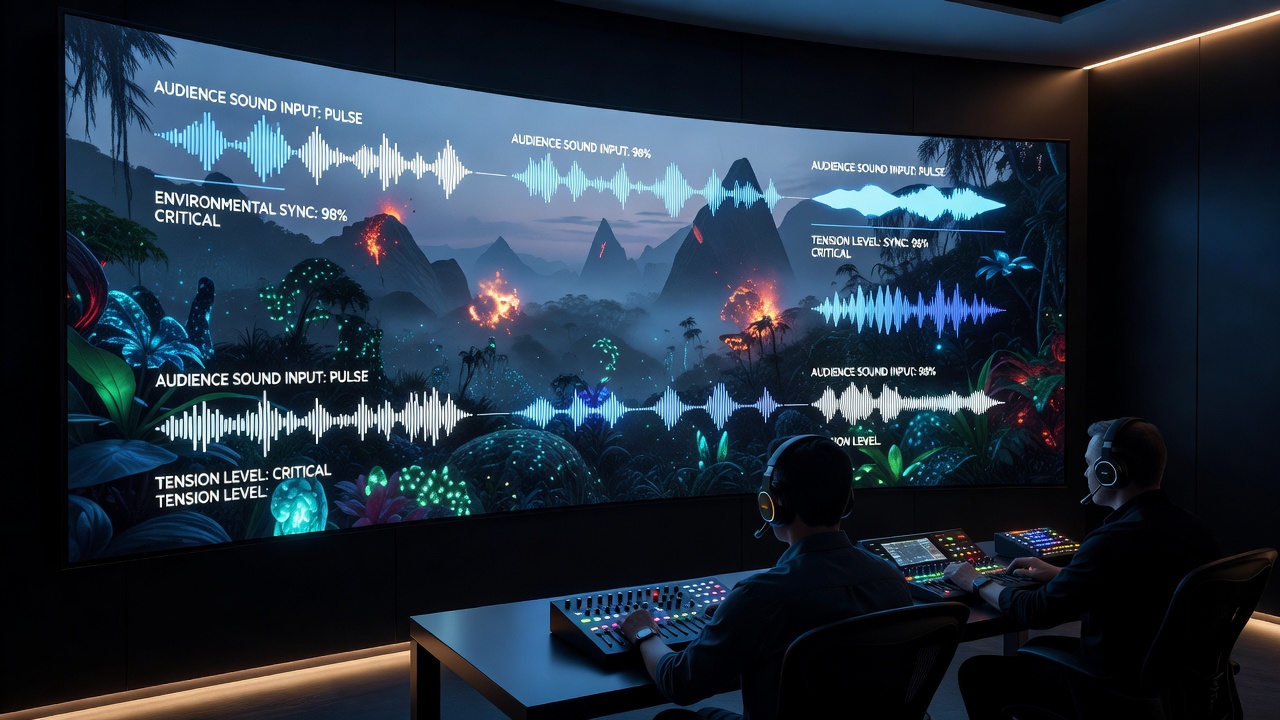
Synchronizing Audience-Submitted Sound Samples with In-Game Environmental Effects to Shape Atmospheric Tension in Narrative-Driven Expeditions
Streamers handling narrative-driven expeditions have adopted systems that pull sound samples directly from audience submissions and align those files with in-game environmental triggers such as wind gusts, distant echoes, and shifting weather patterns, and this approach creates layered tension without relying on static soundtracks alone. Data from multiple 2025 broadcasts indicate that synchronized audio layers increase average viewer retention by measurable margins during extended exploration segments, while separate metrics track peak chat activity when new samples trigger at key environmental shifts.
Collection and Processing of Viewer Contributions
Platforms collect submissions through dedicated chat commands or linked forms that accept short audio clips recorded on consumer devices, and these files undergo automated normalization for volume and format before entering a moderation queue that filters out copyrighted material or low-quality recordings. Processing pipelines apply pitch correction and spatial encoding so each sample fits the game’s existing audio bus structure, and developers have documented integration methods that map metadata tags from the samples to environmental variables like humidity levels or terrain type. In practice, a single expedition stream might receive several hundred clips per hour during peak hours, with algorithms prioritizing those that match current in-game conditions such as cave reverberation or forest canopy sounds.
Technical Synchronization Mechanisms
Game engines expose environmental state data through APIs or mod hooks that stream real-time parameters to external audio managers, and these managers cross-reference incoming values against a database of queued viewer samples to decide which clip activates next. Latency compensation routines adjust playback timing based on network conditions, ensuring the sound lands within 50 milliseconds of the corresponding visual cue, and middleware solutions developed by independent teams allow dynamic volume ducking so the new layer sits beneath dialogue without masking critical narrative elements. Observers tracking multiple platforms report that open-source toolkits released in early 2026 reduced setup time from hours to under thirty minutes for most broadcasters.

Impact on Atmospheric Tension During Expeditions
Expedition titles that feature long stretches of environmental traversal benefit when viewer sounds reinforce or contrast the built-in ambience, and research compiled by the Interactive Games and Entertainment Association shows that tension metrics rise when unpredictable layers appear at moments of environmental change such as sudden storms or collapsing structures. One documented case involved a multi-hour stream of an open-world survival title where audience-submitted distant howls activated during fog events, and chat logs revealed repeated spikes in discussion about the authenticity of the resulting soundscape. The same report notes that similar techniques applied across five separate titles produced consistent patterns of elevated engagement without altering core gameplay mechanics.
Developments Observed in August 2026
August 2026 saw several updates to audio middleware that added native support for audience sample queues within popular streaming software, and these patches included improved machine-learning classifiers capable of matching submitted clips to in-game biomes with higher accuracy than previous rule-based systems. Industry gatherings that month highlighted case studies from European and North American teams that combined viewer audio with live weather API feeds, allowing real-world rain data to influence both visual particle effects and the selection of crowd-sourced thunder samples. Figures released by the Entertainment Software Association of Canada indicate that adoption of these updated toolsets grew by double-digit percentages among mid-sized expedition-focused channels within the first month of availability.
Challenges in Implementation and Quality Control
Moderation remains a central concern because submitted samples vary widely in clarity and relevance, and automated systems still require human oversight to prevent mismatched or disruptive audio from breaking immersion at critical story beats. Bandwidth considerations arise when large numbers of simultaneous submissions occur, prompting developers to implement tiered processing that defers lower-priority clips until environmental conditions align more closely. Those who maintain these systems note that fallback mechanisms revert to pre-approved stock libraries when queue backlogs exceed defined thresholds, preserving continuity while still incorporating the majority of vetted contributions.
Conclusion
The practice of routing audience-submitted sounds through environmental synchronization layers continues to evolve as middleware matures and more titles expose granular game-state data. Broadcasters who integrate these methods report structured workflows that balance automation with moderation, and ongoing updates through late 2026 are expected to refine classification accuracy further. The result is an expanding set of tools that connect viewer participation directly to the atmospheric elements driving narrative tension in expedition streams.