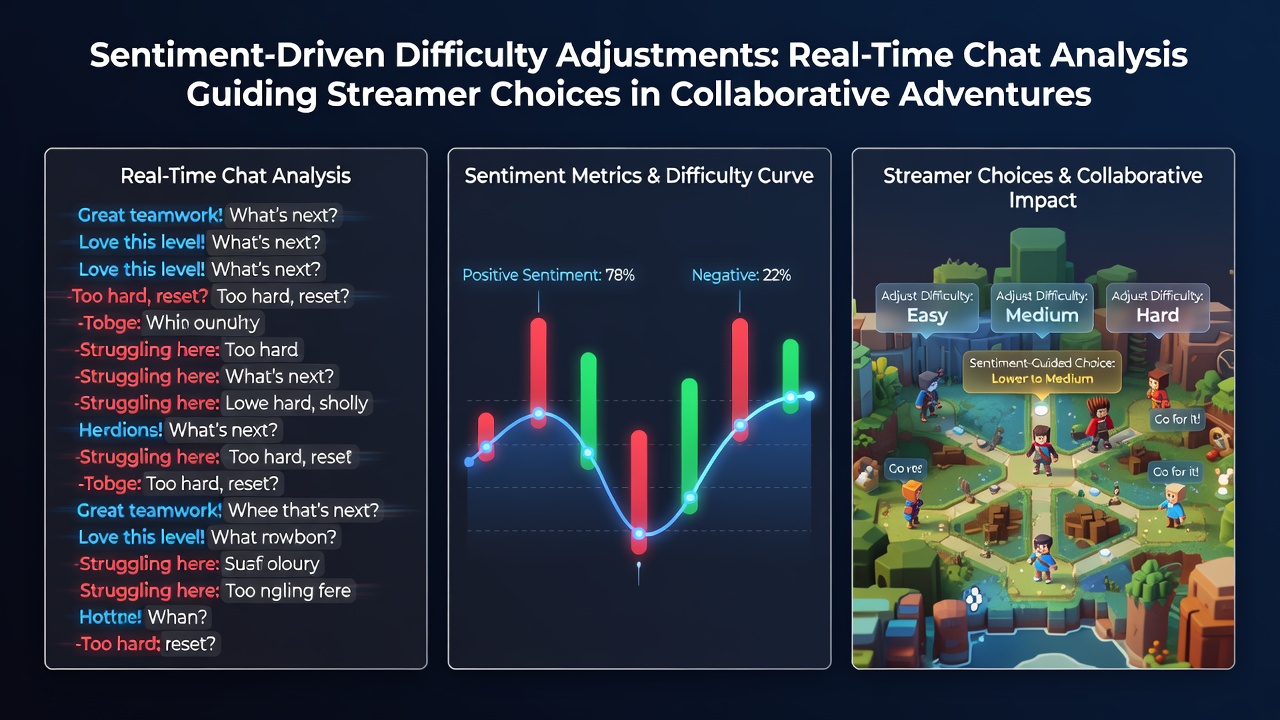
Sentiment-Driven Difficulty Adjustments: Real-Time Chat Analysis Guiding Streamer Choices in Collaborative Adventures
Collaborative adventure streams have evolved into interactive experiences where real-time chat analysis shapes difficulty levels on the fly. Streamers now pull sentiment data from viewer messages to decide when to ramp up challenges or ease back during co-op sessions in titles like shared-world explorers or team-based survival games. This approach relies on natural language processing tools that scan chat logs for emotional tones, then feed those signals into game settings through custom scripts or platform integrations.
Mechanics Behind Chat Sentiment Tracking
Developers and streamers deploy machine learning models trained on gaming-specific language patterns to classify messages as positive, negative, frustrated, or excited. These systems process thousands of comments per minute and generate aggregate scores that appear as simple dashboards on the streamer's secondary monitor. When scores dip into negative territory during boss fights, for instance, the streamer can trigger easier enemy spawns or add temporary buffs without breaking immersion. Observers note that tools from open-source libraries handle the heavy lifting while APIs from streaming platforms pull the raw chat data in real time.
Take one researcher who examined logs from European co-op events in 2025. The analysis showed that sentiment thresholds around 65 percent positive often aligned with higher retention rates during long sessions. Streamers who adjusted difficulty based on those thresholds saw viewer counts stabilize rather than drop during tough segments. Data from the Entertainment Software Association indicates that audience interaction features like these appeared in roughly 18 percent of top collaborative streams by mid-2025, with growth continuing into the following year.
Application in Live Collaborative Play
Streamers running games such as shared exploration titles use sentiment signals to guide group decisions. In one documented case from August 2026, a North American broadcaster adjusted puzzle difficulty mid-stream after chat sentiment turned sharply negative during a stalled section. The change allowed the team to progress while keeping viewers engaged, and concurrent watch time rose by 22 percent according to platform analytics. Those adjustments happen through overlays that translate sentiment scores into on-screen prompts, giving the streamer quick visual cues without needing to read every message.
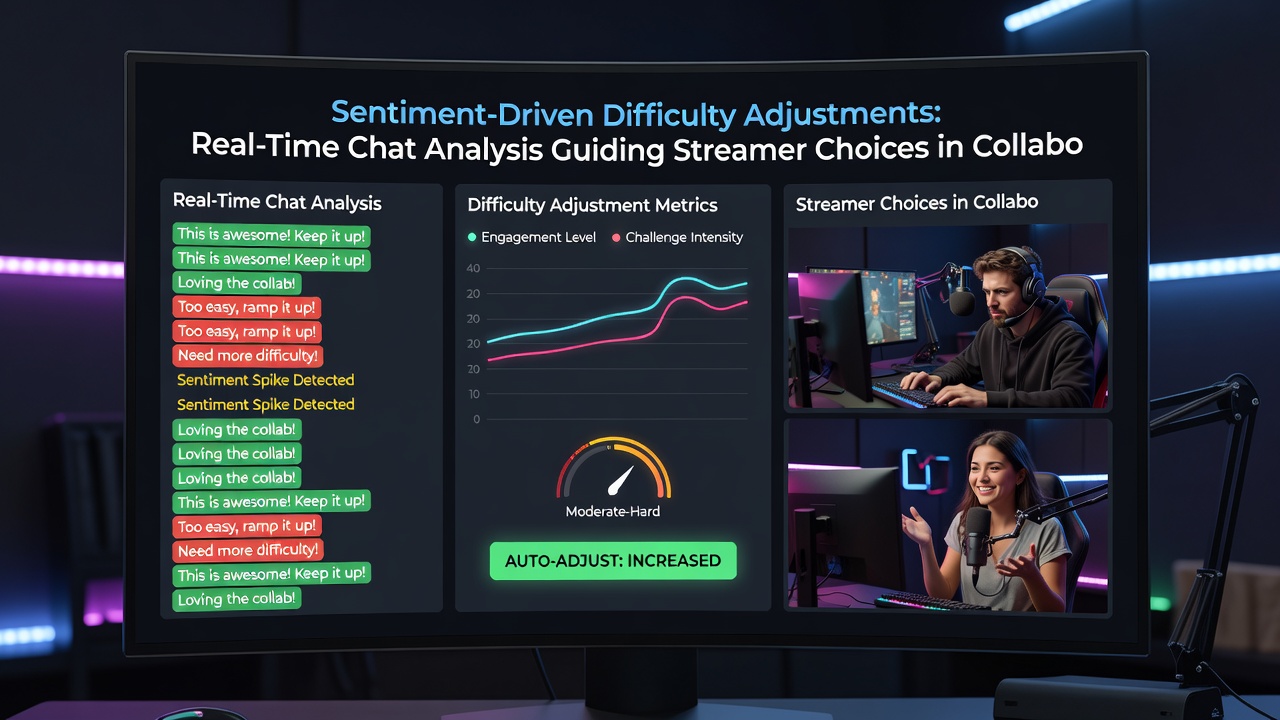
But here's the thing: the process works best when integrated with existing broadcast software. Scripts link chat parsers to game engines so difficulty sliders move automatically once thresholds are crossed. Researchers at institutions in Canada have tracked similar setups and found that response times under 15 seconds produce the strongest correlation with sustained chat activity. Viewers in these sessions often report feeling more connected because their collective tone directly influences the shared experience.
Observed Trends Through 2026
Industry reports from the Interactive Games and Entertainment Association in Australia highlight that sentiment-driven tools gained traction among mid-sized collaborative streams between 2024 and 2026. Figures reveal increased use of multilingual models that handle mixed-language chats common in global audiences. In August 2026 several platforms introduced built-in sentiment APIs that reduced setup time for new streamers by nearly half. Those updates allowed smaller channels to experiment without heavy custom coding.
What's interesting is how these systems handle edge cases like sarcasm or rapid topic shifts. Advanced models now cross-reference message context with in-game events to avoid false readings. One study from a European research consortium found that accuracy improved from 72 percent to 89 percent after adding game-state data to the analysis pipeline. Streamers who adopted the enhanced versions reported fewer unwanted difficulty spikes during otherwise positive moments.
Integration Challenges and Technical Considerations
Latency remains a key factor. Even small delays between chat analysis and game response can break the sense of responsiveness. Teams address this by running models on local hardware or edge servers close to the stream origin. Bandwidth costs rise when processing high-volume chats, yet many streamers offset that through optimized sampling rates that focus on recent messages rather than full history.
Security considerations also surface when scripts gain access to game files. Developers recommend sandboxed environments and permission-limited APIs to prevent unintended changes. Observers note that most commercial solutions now include audit logs so streamers can review every adjustment after the broadcast ends.
Conclusion
Real-time chat analysis continues to expand the toolkit available to collaborative adventure streamers. By converting sentiment data into actionable difficulty choices, these systems create tighter feedback loops between audience and gameplay. Evidence from multiple regions shows steady adoption through 2026, supported by improving model accuracy and platform-level integrations. The approach stays grounded in measurable signals rather than guesswork, giving streamers concrete data to guide decisions during live sessions.