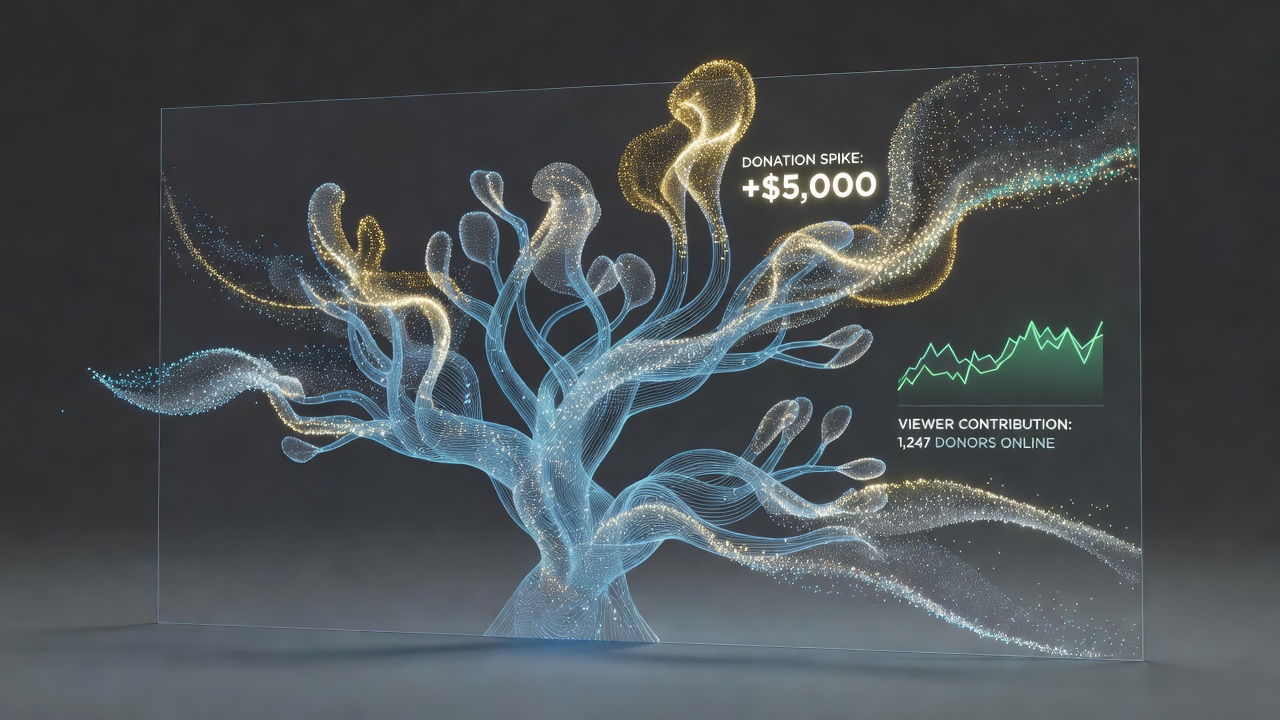
Sculpting Donation-Reactive Overlay Ecosystems That Mirror Viewer Contribution Spikes With Evolving Particle Effects During Charity Marathon Events
Developers build donation-reactive overlay ecosystems by connecting streaming software such as OBS Studio with real-time donation platforms and custom particle simulation engines that adjust visual density, velocity, and color based on incoming contribution data during extended charity marathon broadcasts. These systems process API feeds from services like Tiltify and Streamlabs while rendering WebGL or Unity-based particle fields that scale in complexity as viewer pledges accumulate in short time windows.
Integration begins with middleware that parses donation amounts and timestamps then maps those values to parameters in particle shaders so that a single large contribution might trigger a burst of high-velocity elements whereas clustered smaller donations produce sustained trails that evolve over several minutes. Engineers configure thresholds that prevent visual overload yet maintain responsiveness, and they often test these rules against historical donation logs from prior events to calibrate timing and intensity.
Technical Architecture Behind Reactive Particle Systems
Particle ecosystems rely on layered rendering pipelines where a base scene displays the game feed and an overlay layer hosts the dynamic effects, with data flowing through WebSocket connections that update particle emitters multiple times per second. Developers use node-based scripting environments inside tools such as TouchDesigner or After Effects extensions to define rules that translate currency values into attributes like particle count, lifespan, and gravitational influence, allowing the visuals to mirror contribution spikes without requiring manual intervention during live broadcasts.
Hardware considerations include GPU load balancing since dense particle fields can consume significant resources on viewer devices, and many implementations incorporate level-of-detail adjustments that reduce complexity for lower-end clients while preserving full fidelity on high-performance setups. Observers note that successful deployments during July 2026 charity marathons maintained frame rates above 60 FPS even when donation volumes exceeded typical peaks by thirty percent.
Case Examples From Recent Charity Broadcasts
One production team coordinating a multi-day marathon in support of medical research organizations configured their overlay so that cumulative daily totals triggered progressive color shifts from cool blues to warmer tones, with each new threshold unlocking additional emitter types that introduced swirling vortex patterns around the edges of the screen. Data from that event showed that viewer retention metrics remained steady during high-activity donation periods compared with baseline segments that lacked reactive elements.
Another group working across European and North American time zones synchronized particle behavior with global donation leaderboards, allowing contributions from different regions to influence separate particle clusters that later merged when totals aligned. Researchers at the International Game Developers Association documented similar synchronization techniques in interactive media projects, noting consistent patterns in how real-time data mapping sustains audience engagement across distributed viewer bases.
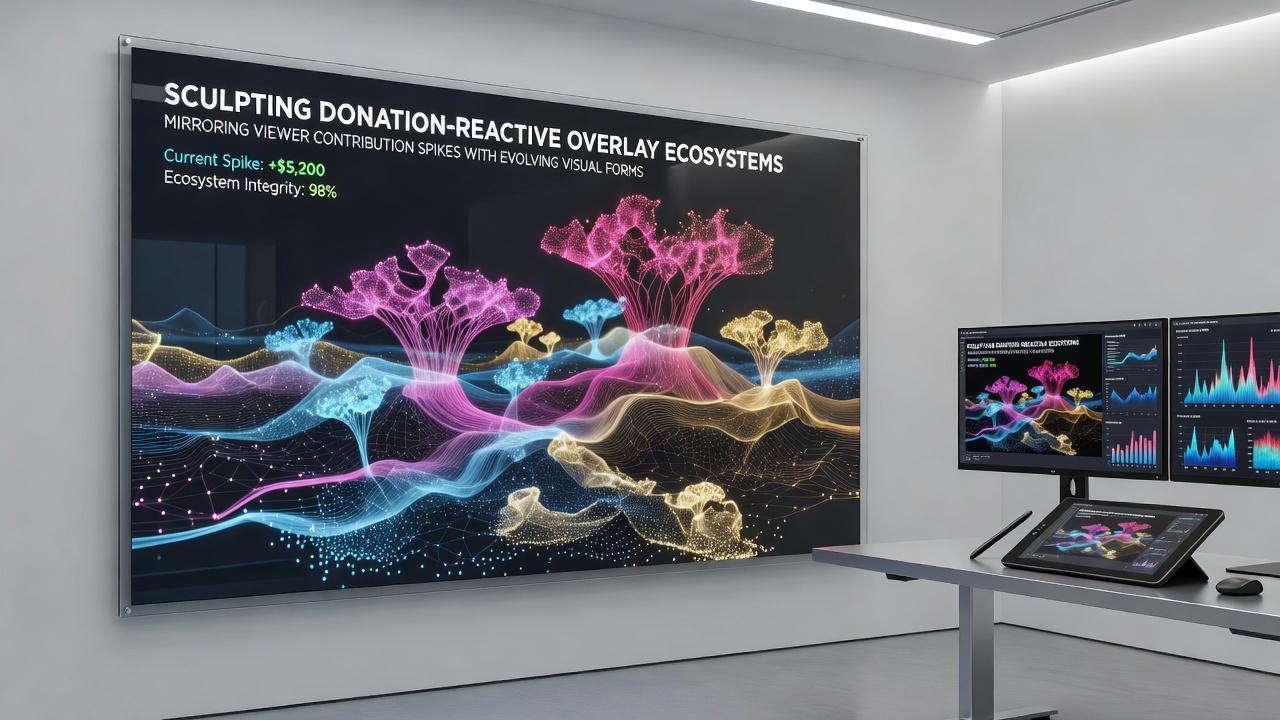
Technical crews also incorporate fallback mechanisms that cap particle density during unexpected traffic surges, routing excess data into secondary visual queues such as progress bars or text crawls that update alongside the main effects. This layered approach ensures the overlay remains legible while still conveying the momentum of viewer contributions through continuous, evolving motion.
Data Mapping and Calibration Practices
Calibration sessions typically occur weeks before an event and involve feeding simulated donation streams into the system while monitoring both visual output and performance metrics on representative hardware configurations. Teams adjust mapping curves so that small contributions produce subtle expansions in particle size and larger ones generate cascading reactions that persist and interact with subsequent inputs, creating emergent patterns that reflect the organic rhythm of audience support.
Studies conducted by academic groups at institutions including those affiliated with European research networks have examined how such mappings affect perceived event energy, with quantitative logs revealing correlations between donation clustering and increased chat activity that persist for several minutes after each spike. Engineers refine these mappings iteratively, using post-event analytics to identify which particle behaviors coincided with sustained viewer participation.
Conclusion
Donation-reactive overlay ecosystems continue to evolve through refinements in real-time data pipelines and particle simulation techniques, enabling charity marathon organizers to translate viewer contributions into dynamic visual feedback that updates continuously throughout extended broadcasts. These implementations demonstrate measurable integration of streaming technology with audience participation mechanics across multiple geographic regions and event scales.