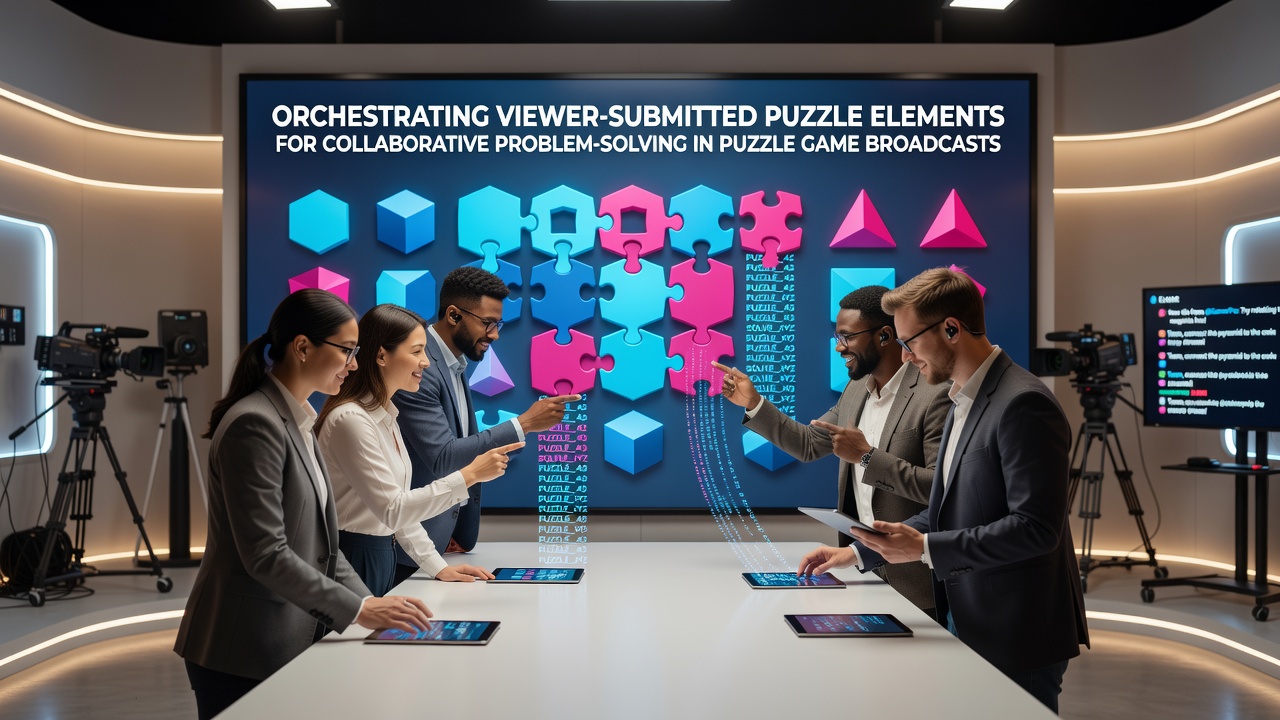
Orchestrating Viewer-Submitted Puzzle Elements for Collaborative Problem-Solving in Puzzle Game Broadcasts
Broadcasters have developed structured approaches for integrating viewer-submitted puzzle elements into live puzzle game streams, and these methods support real-time collaboration among participants. Viewers propose puzzle mechanics, solutions, or modifications through dedicated channels such as moderated Discord servers or integrated forms, while streamers evaluate submissions for compatibility with the current game title before incorporating them into ongoing sessions. This process relies on clear submission guidelines that specify format requirements, difficulty parameters, and thematic alignment to maintain broadcast flow.Submission and Integration Workflows
Stream teams typically establish multi-stage review pipelines where initial submissions pass through automated filters before reaching human moderators. Researchers have documented how platforms like custom browser sources in OBS Studio enable live previews of proposed elements, allowing audiences to vote on priority items during intermission segments. Data from industry reports indicate that structured intake systems reduce processing time by organizing entries into categories such as logic puzzles, spatial challenges, and narrative-integrated riddles. Those managing the broadcasts often use spreadsheet trackers synchronized with chat bots to log accepted ideas and assign them to specific game segments, which creates a transparent queue visible to all participants.
Tools Supporting Collaborative Solving
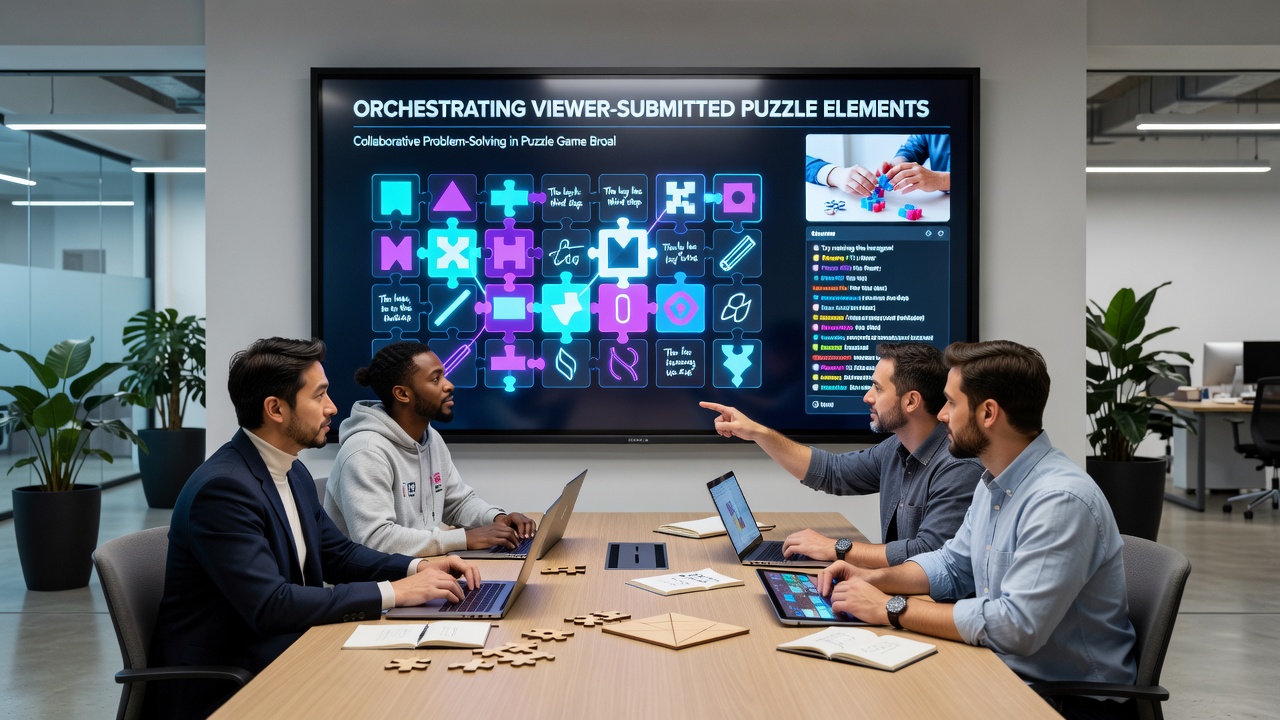
Technical setups combine real-time communication layers with game modification tools, and many productions employ shared digital whiteboards alongside in-game editors. Participants contribute partial solutions through voice chat integrations or text overlays, which the streamer then tests on stream while explaining decision points. According to findings from the Interactive Games and Media program at Rochester Institute of Technology, these synchronized interfaces increase solution accuracy when multiple viewers contribute simultaneously to modular puzzle components. Streamers schedule dedicated collaboration blocks, often lasting 15 to 25 minutes, during which submitted elements receive focused attention before returning to standard gameplay progression.
Viewer Engagement Patterns
Engagement metrics tracked across platforms show elevated chat activity during collaborative segments compared to solo playthrough phases. Observers note that repeat contributors frequently reference prior submissions when new elements appear, which builds continuity across multiple broadcasts. In July 2026, several major puzzle game events aligned with global time zone overlaps, resulting in higher submission volumes from regions including North America, Europe, and Asia-Pacific zones. Production teams responded by expanding moderation teams and pre-screening more entries in advance to accommodate the increased load without disrupting schedule timing.
Examples from Established Broadcasts
One documented case involved a streamer running a custom mod of a physics-based puzzle title where viewers submitted gravity-altering rules that altered level layouts mid-session. Another production integrated text-based clues submitted through a public form into an adventure game, requiring collective interpretation before the streamer applied the consensus solution. Industry organizations such as the Entertainment Software Association have tracked how these formats extend average view duration, particularly when puzzle resolution depends on distributed input rather than individual streamer knowledge.
Technical Considerations and Scaling
Bandwidth management becomes critical when multiple data sources feed into a single broadcast overlay, and teams implement rate limiting on submission endpoints to prevent overload. Sound design adjustments often accompany complex puzzle integrations, with directional audio cues highlighting viewer-contributed elements during testing phases. Academic studies on collaborative digital environments suggest that visual feedback mechanisms, such as color-coded contribution markers, help maintain clarity when dozens of participants propose overlapping ideas at once.
Conclusion
Orchestration systems for viewer-submitted puzzle content continue to evolve through iterative refinement of review protocols, integration tools, and audience coordination techniques. Broadcasters who maintain consistent documentation of successful workflows report smoother transitions between individual and group problem-solving segments. The approach demonstrates measurable effects on participation rates across different puzzle genres and audience sizes, with technical infrastructure playing a central role in sustaining collaborative momentum over extended sessions.