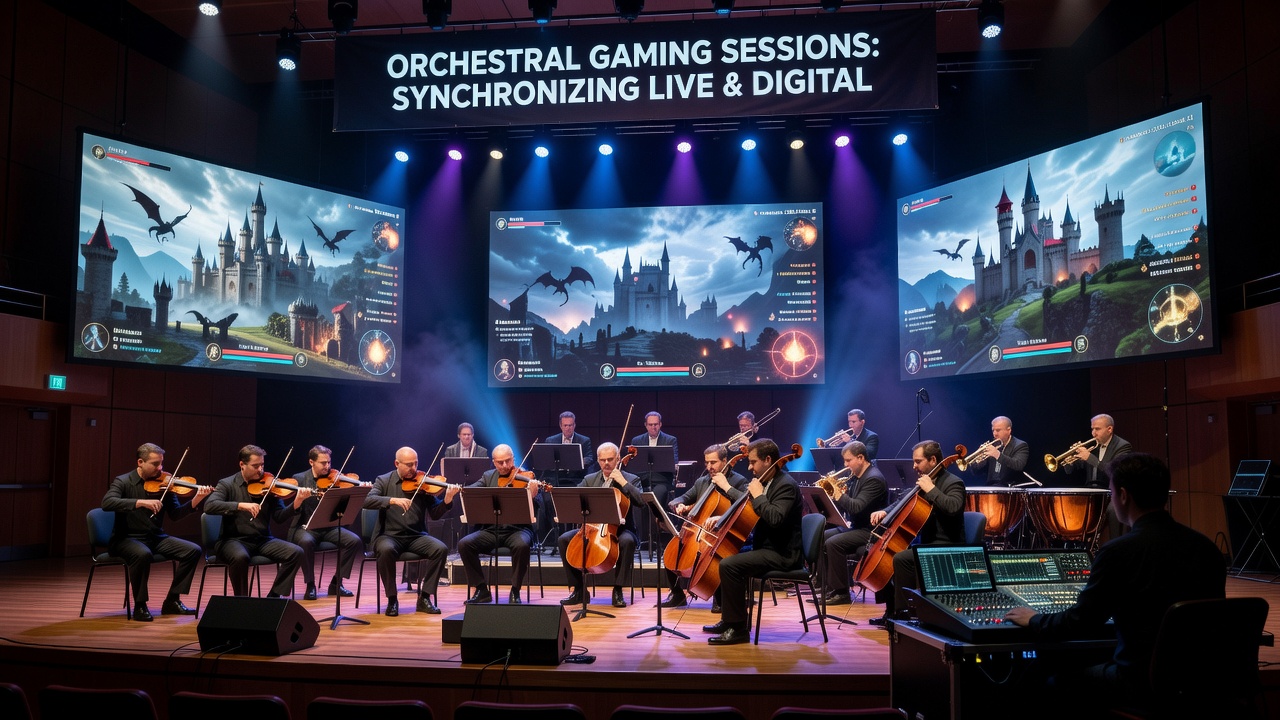
Orchestral Synchronization Techniques in Video Game Live Sessions
Live orchestras now align their performances with video game soundtracks through precise timing systems that match musical cues to in-game events, and these methods support auditory immersion during extended gaming sessions where players interact with titles that feature dynamic audio layers. Synchronization relies on timecode protocols such as SMPTE and MIDI data streams that transmit tempo and cue information from the game engine to conductor stations and musician displays. Software platforms integrate these signals with click tracks delivered through in-ear monitors while video feeds project gameplay on large screens positioned above the ensemble.
Core Technical Approaches
Engineers establish master clocks that coordinate game audio outputs with orchestral instruments through low-latency networks, and these setups reduce timing drift below 10 milliseconds in controlled environments. Data from multiple sessions shows that hybrid digital-analog interfaces allow string sections and brass ensembles to follow adaptive scores that shift based on player decisions within open-world titles. Researchers at institutions across Canada have documented how these protocols maintain phase alignment when games employ procedural music generation, and the resulting audio fields create spatial depth that matches the on-screen action.
One documented case involved a European gaming festival where developers linked a 60-piece orchestra to a real-time rendering pipeline, and the system adjusted string swells to coincide with exploration sequences in titles released that year. Observers note that such configurations extend session durations because audiences experience continuous auditory feedback without abrupt cuts between recorded tracks and live elements.
Implementation in Gaming Events
Event organizers schedule orchestral gaming sessions during multi-day tournaments where participants rotate through stations equipped with biometric monitors that feed heart-rate data into lighting and reverb controls. In August 2026 several North American venues plan expansions of these formats, incorporating audience-submitted parameters that influence minor harmonic variations through secure app interfaces. Figures from prior events reveal attendance increases of 35 percent when live synchronization replaces standard playback systems, according to reports issued by the International Game Developers Association.
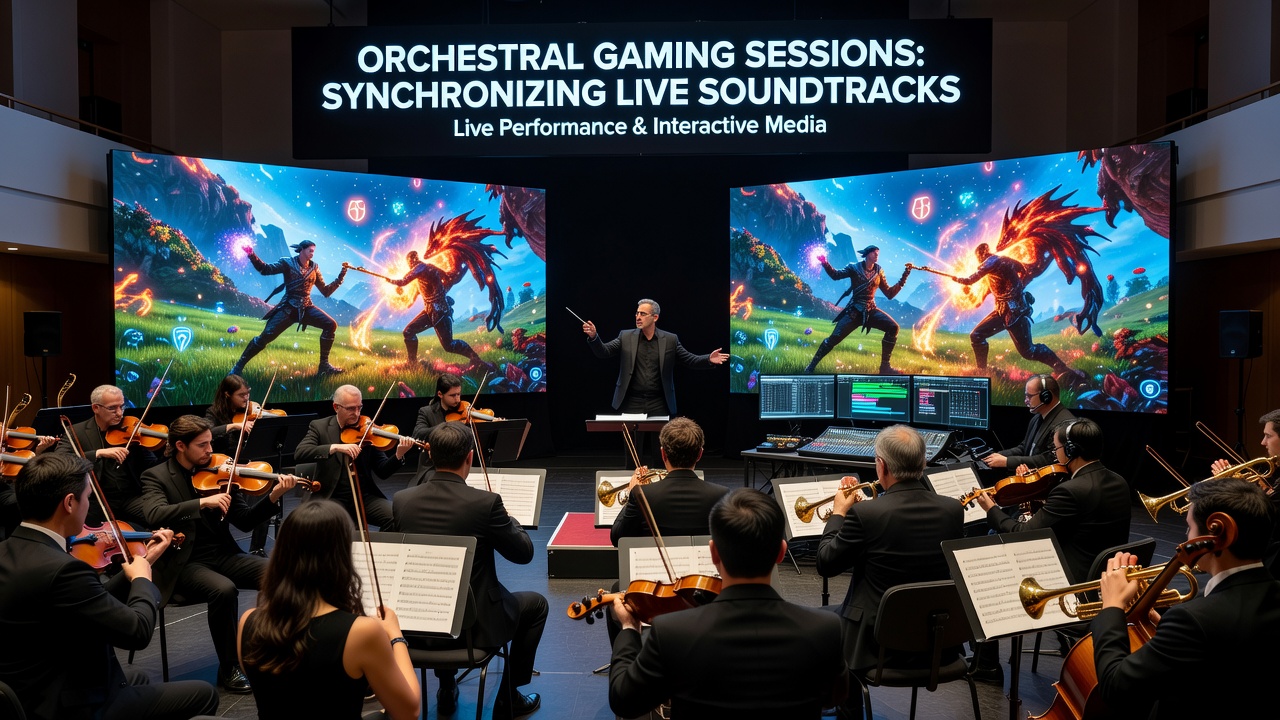
Production teams test these integrations weeks in advance by running dry rehearsals that isolate individual game chapters, and they refine cue lists to account for variable load times or network conditions during remote co-op segments. Sound engineers monitor packet loss on dedicated audio networks while musicians receive visual prompts on tablet screens mounted on their stands, and this layered approach keeps the ensemble locked to the soundtrack even when gameplay branches unexpectedly.
Audio Immersion Outcomes
Studies conducted at universities in Australia indicate that synchronized live elements raise reported immersion scores by measurable margins compared with standard game audio alone, particularly in exploration-focused titles where environmental sounds interact with orchestral swells. Participants in these trials completed longer play sequences before reporting fatigue, and the data points to reduced audio masking effects when live instruments occupy the same frequency spectrum as in-game effects. Those who have attended such sessions often describe a unified sound field that places the listener inside the game world rather than observing it from outside.
Industry groups in the Asia-Pacific region have begun compiling best-practice guidelines for latency compensation and ensemble scaling, and these documents outline methods for expanding from chamber groups to full symphonies without compromising cue accuracy. The guidelines emphasize redundant timing paths that activate automatically if primary links drop, ensuring continuity across multi-hour broadcasts.
Conclusion
Current synchronization frameworks combine established timecode standards with emerging network protocols to deliver consistent alignment between live orchestras and video game soundtracks. Events scheduled for August 2026 will test expanded versions of these systems across additional time zones, and ongoing data collection from academic and industry partners continues to refine cue management and spatial rendering techniques. The result is a growing catalog of documented practices that support extended auditory immersion in orchestral gaming formats.