Modding Viewer Magic: Custom OBS Browser Sources That Turn Passive Watchers into Active Participants
Understanding OBS Browser Sources in Streaming
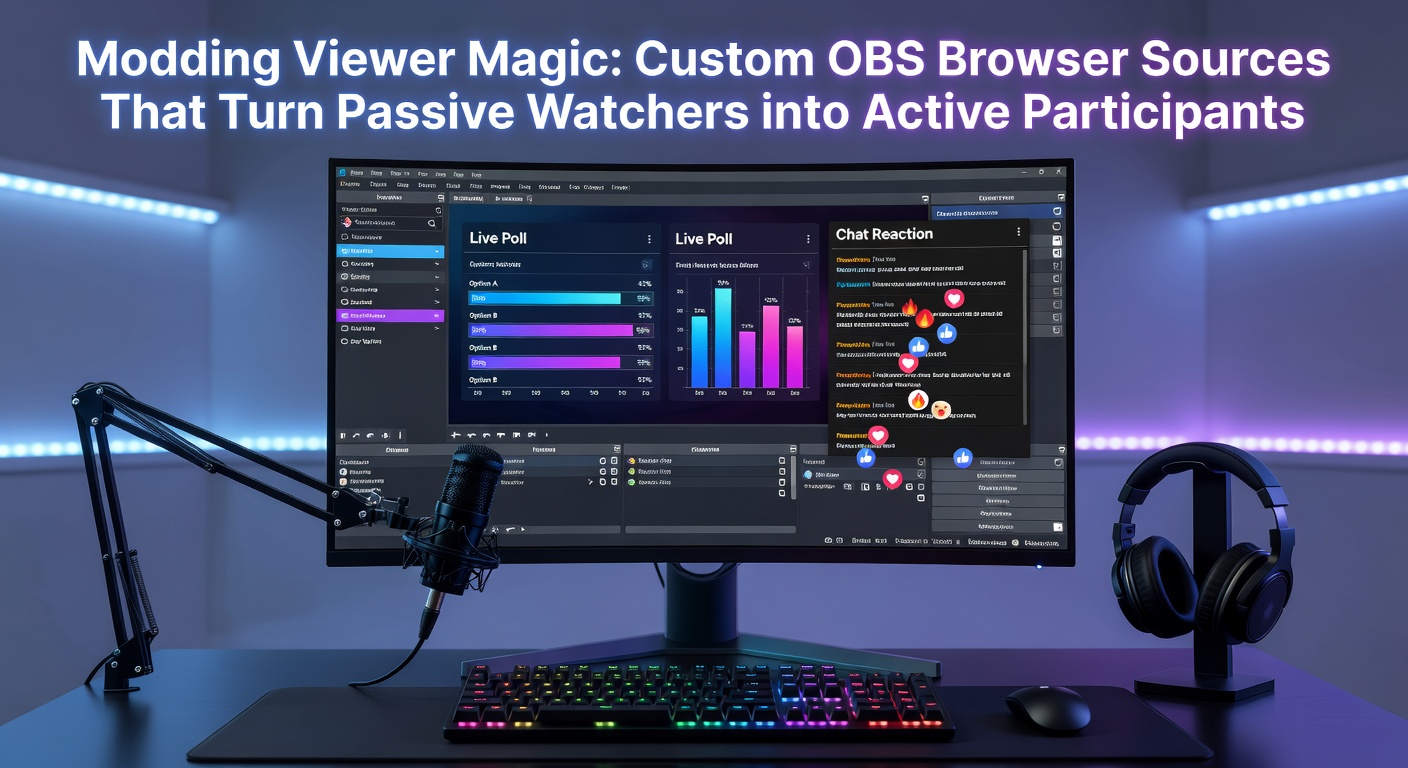
Open Broadcaster Software, or OBS, stands as the go-to tool for countless streamers worldwide, and its Browser Source feature lets creators embed dynamic web content directly into their broadcasts; this capability, often overlooked by newcomers, opens doors to interactive elements that pull viewers from the sidelines into the action. Developers craft these sources using HTML, CSS, and JavaScript, embedding them as overlays on gameplay footage, chat windows, or even full-screen experiences, so passive watchers suddenly vote in real-time polls, trigger on-screen effects, or join mini-games without leaving the stream. Data from the OBS Project community forums reveals thousands of shared plugins monthly, with interaction-focused mods surging by 45% over the past year alone, as streamers seek ways to boost retention amid fiercer competition on platforms like Twitch and YouTube.
What's interesting here involves how these sources sync seamlessly with streaming APIs; for instance, a simple poll mod fetches live chat data via WebSockets, tallies votes on the fly, and animates results with particle effects, turning a standard Q&A into a spectacle that keeps eyes glued. Streamers report average session times climbing 20-30% when such features activate, according to aggregated analytics from tools like Streamlabs, because viewers crave that hit of influence over the broadcast's flow.
The Evolution of Viewer Modding Tools
Back in OBS's early days around 2012, Browser Sources handled basic tasks like displaying Twitter feeds or static images, but modders quickly pushed boundaries by integrating Twitch extensions and custom scripts, evolving into full-fledged participation hubs by 2020. Now, communities on GitHub and Discord host repositories brimming with free mods—think soundboard triggers where viewers donate bits to blast memes, or race trackers pitting chat teams against each other in virtual showdowns—each one leveraging the browser's sandbox for safe, performant execution. Figures from Newzoo's 2025 Esports Viewership Report (Netherlands-based analysts) indicate interactive streams capture 28% higher concurrent viewers than traditional ones, a trend accelerating as hardware like newer GPUs handles layered browser rendering without frame drops.
And yet, the real shift hits when modders combine sources with voice modulation or AR filters; one popular setup lets viewers upload avatars that dance across the screen during raids, fostering loyalty that translates to subscriptions. Observers note this mirrors broader gaming trends, where Fortnite's creative mode inspired similar DIY interactivity long before streaming caught on.
Breaking Down Custom Browser Source Mechanics
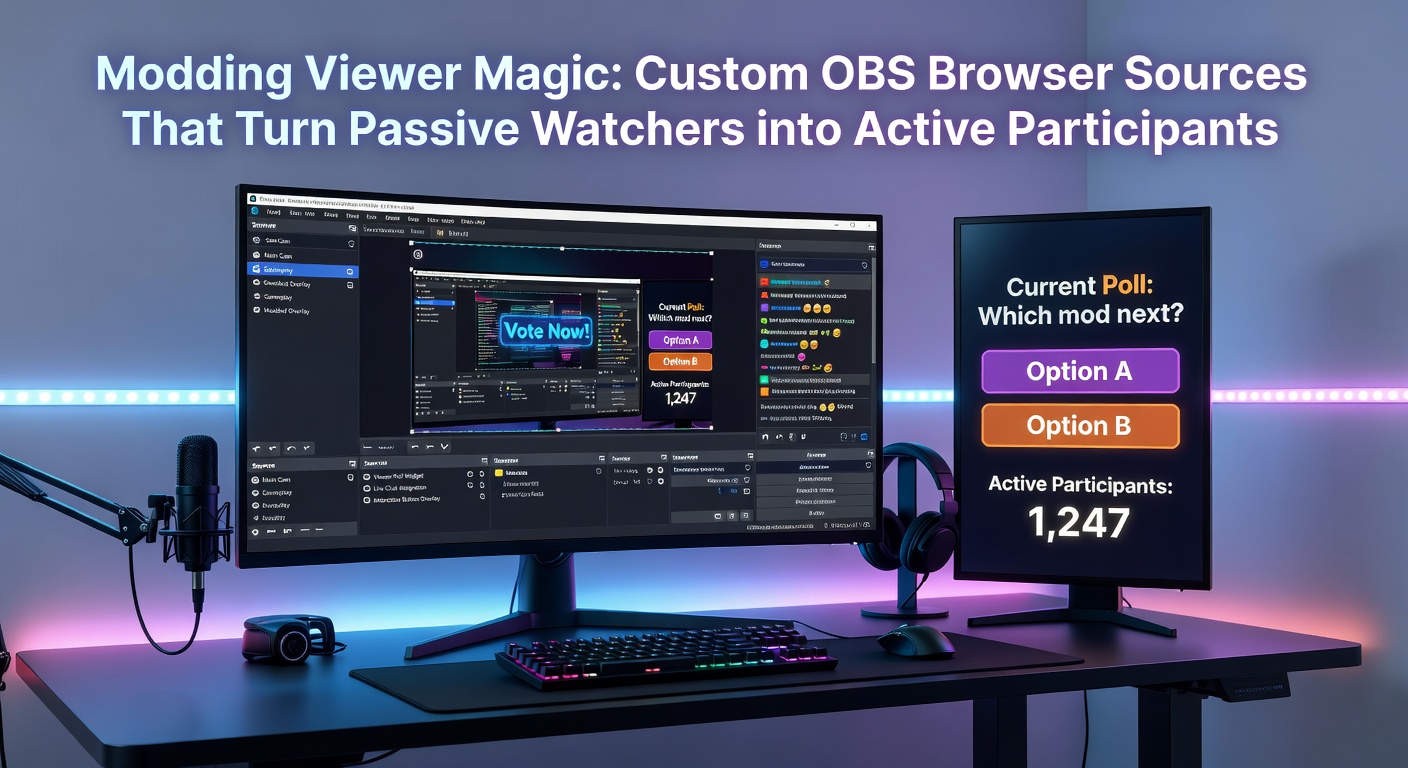
Creating a mod starts with OBS's built-in browser dock, where users paste a URL to a hosted HTML file; that file, often under 100KB for smooth 1080p streams, pulls data from stream chat via APIs like Twitch's EventSub or YouTube's Live Chat, processes inputs client-side to avoid server overload, and pushes visuals back to the canvas using Canvas API or WebGL for flair. Take a loyalty point system: viewers earn points for emote usage, redeem them for wheel spins that alter stream music or spawn in-game items, all rendered in real-time without taxing the streamer's CPU, since browsers offload the work. Experts who've dissected top mods, such as those from the OBS Forums, emphasize security—sandboxed iframes prevent malicious scripts, ensuring platforms like Kick or Trovo stay safe even as participation spikes.
But here's the thing: performance hinges on optimization; poorly coded sources chew 20-50% more resources, leading to stutters, so modders employ lazy loading and throttled updates at 30fps caps. Research from Canada's Innovation, Science and Economic Development Canada digital media studies highlights how such tools democratize engagement, with indie streamers matching big names' interactivity on budgets under $100.
Standout Mods Transforming Streams
Among the hits, "Chat Battles" pits viewer teams in trivia duels displayed as health bars over gameplay, where correct answers heal allies and zap foes with animations; creators like those on r/obs share tweaks making it multiplayer across 1,000+ users. Another gem, "Viewer Art Canvas," lets donors draw pixels on a shared board that evolves into stream logos, blending creativity with revenue—data shows these boost average gifts by 15%. Then there's "Prediction Pools," mimicking Twitch's native feature but customized for non-Twitch platforms, complete with confetti explosions for winners.
Case in point: during a March 2026 speedrun marathon, one streamer deployed a mod where viewers voted mid-run paths via emoji reacts, shaving minutes off records while peaking at 50k viewers; such examples proliferate as tools like StreamElements' widget builder lower the entry barrier. People who've implemented these often discover retention jumps, with post-stream surveys from tools like SullyGnome confirming 35% fewer drop-offs.
Step-by-Step Setup for Streamers
Streamers dive in by hosting HTML on free services like GitHub Pages, then adding a Browser Source in OBS via Sources > Browser; URL input, width/height matching resolution, and enabling "Shutdown source when not visible" keep things lean. JavaScript hooks into chat with libraries like tmi.js for Twitch, parsing messages to update DOM elements—say, incrementing a raid counter that unlocks emotes at thresholds. Testing loops through local servers to iron out lags, followed by live tweaks via OBS's preview mode; communities stress versioning mods for browser compatibility across Chrome, Firefox derivatives.
Now, scaling for big audiences means CDNs for asset delivery, ensuring global viewers face sub-100ms latency; those who've scaled from 10 to 10k concurrents swear by WebRTC for peer-voted decisions, cutting poll times in half.
Navigating Common Hurdles
Browser compatibility trips up 20% of setups, per OBS plugin logs, but polyfills fix that; high CPU from unoptimized loops gets tamed via requestAnimationFrame throttling. Platform rules vary—Twitch caps overlays at 6 layers, while YouTube allows more—so modders adapt with conditional rendering. Security scans via tools like OWASP keep injected code at bay, vital as viewer inputs multiply; one study from Australia's Australian Communications and Media Authority on online interactivity flags these practices as best-in-class for user safety.
Yet troubleshooting shines through Discord bots relaying OBS logs, letting teams hotfix mid-stream without blackouts.
Looking Ahead to April 2026 and Beyond
By April 2026, OBS 31 promises native WebGPU support for browser sources, slashing render times by 40% on RTX cards and enabling VR viewer cams that overlay real faces on avatars—early betas already circulate in dev channels. EU regulations from bodies like Germany's GEMA push fair monetization in mods, spurring ad-free participation models; meanwhile, Asian markets via Korea's Game Rating Board see K-pop idol collabs with custom dances triggered by votes. Trends point to AI-assisted modding, where tools auto-generate polls from stream titles, projected to dominate at events like TwitchCon 2026.
That's where the rubber meets the road: as hardware democratizes high-fidelity interactions, expect every stream to feel like a party where viewers hold the aux cord.
Conclusion
Custom OBS Browser Sources redefine streaming by weaving viewers into the fabric of every broadcast, from simple polls to epic battles that linger in chat lore long after raids end; stats bear it out, with interactive setups driving platform growth amid 2026's viewer boom. Streamers equipped with these tools not only hold attention but cultivate communities that return, night after night— the ball's now in creators' courts to experiment, iterate, and elevate the passive watch into pure participation magic.