
Leveraging Gesture Recognition Software To Enable Hands-Free Interactions Between Broadcasters And Their Communities
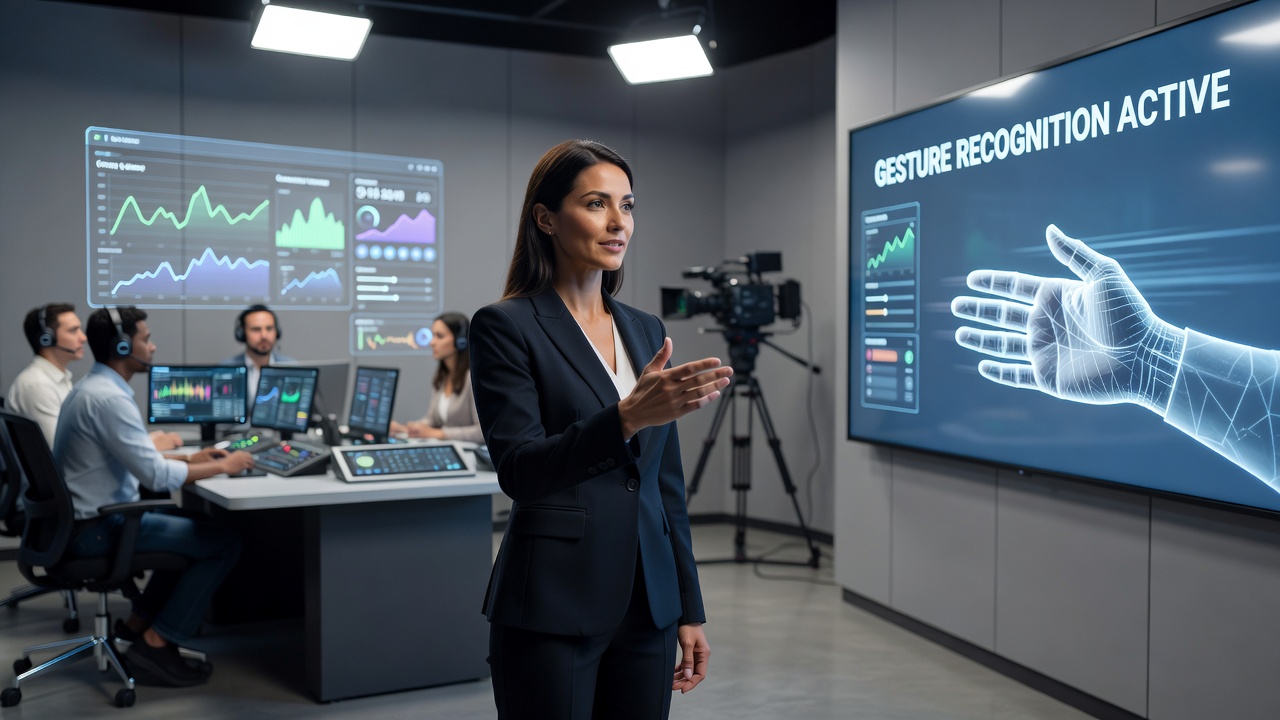
Gesture recognition software has entered mainstream broadcasting workflows as developers integrate computer vision models that translate physical movements into digital commands, and this shift allows on-air talent to manage viewer inputs while keeping both hands available for gameplay or demonstration tasks. Research from academic institutions shows that these systems rely on depth-sensing cameras paired with machine learning classifiers trained on thousands of motion sequences, which enables real-time interpretation of hand waves, nods, or finger positions that correspond to chat commands, polls, or moderation actions. Data from industry reports indicates adoption rates have climbed steadily since 2023 as hardware costs for compatible cameras dropped and software libraries became more accessible through open-source repositories.
Core Technologies Behind Gesture-Based Controls
Developers typically combine skeletal tracking algorithms with convolutional neural networks to detect body landmarks and classify gestures within milliseconds, while integration layers connect these detections directly to streaming software APIs. Studies conducted at European research centers demonstrate that latency remains under 80 milliseconds when systems run on mid-range GPUs, which keeps interactions synchronized with live video feeds. Broadcasters configure custom gesture libraries so a raised palm might trigger a viewer poll or a thumbs-up could acknowledge a donation alert, and these mappings update through simple configuration files rather than code changes. Observers note that calibration routines adjust for lighting conditions and camera angles, which improves reliability across different studio setups.
Applications in Live Community Engagement
Hands-free moderation becomes practical when gesture inputs handle common tasks such as muting disruptive chat participants or highlighting viewer-submitted questions during Q&A segments. Figures from gaming association surveys reveal that streams employing these tools report higher concurrent chat activity because broadcasters maintain visual focus on gameplay while still responding to community cues. In July 2026 several major tournaments incorporated gesture systems to let casters advance bracket displays or switch camera angles without interrupting commentary flow, and similar patterns appear in variety streams where hosts manage giveaways through motion triggers. Integration with existing chat bots allows gestures to queue commands that the bot then executes, which reduces the need for keyboard or mouse interaction during high-intensity segments.
One documented implementation at a North American esports event used wrist rotation gestures to cycle through audience-submitted emotes on screen overlays, and the setup processed over 1,200 unique motions across a four-hour broadcast without requiring additional staff. Researchers at Australian universities have examined how these systems scale when multiple broadcasters share a single gesture recognition instance across collaborative streams, which produces coordinated responses visible to combined audiences.
Implementation Considerations for Different Platforms
Platform-specific APIs determine how gesture outputs translate into on-screen effects, with some services exposing direct hooks for overlay control while others route commands through third-party extensions. Trade group documentation from the Entertainment Software Association outlines best practices for testing gesture accuracy across varied controller types, and these guidelines emphasize iterative calibration sessions that account for viewer camera quality differences. Broadcasters working with global audiences often combine gesture inputs with real-time translation modules so international chat messages receive automated responses triggered by motion cues. Performance metrics collected during endurance streams indicate that gesture systems maintain over 94 percent classification accuracy when operators complete a five-minute setup routine before going live.
Hardware requirements center on cameras with at least 1080p resolution and 60 frames per second capture rates, although newer depth sensors reduce dependence on ambient light. Software frameworks support deployment on both local machines and cloud instances, which gives smaller production teams flexibility when hardware budgets limit on-site processing power. Case examples from Canadian independent broadcasters show successful deployment on laptops equipped with external depth cameras, and those setups handled simultaneous gesture and voice commands without noticeable interference.
Data and Adoption Trends
Market analysis from research firms indicates that gesture-enabled streaming tools reached an estimated 18 percent penetration among mid-tier broadcasters by early 2026, with growth concentrated in genres that benefit from continuous on-screen presence such as competitive play and creative building sessions. Academic papers published through IEEE channels detail accuracy improvements achieved through transfer learning techniques that adapt pre-trained models to individual user movement styles, which cuts training time from hours to minutes. Those who have implemented these systems report that viewer retention metrics remain stable when gesture responses replace traditional hotkey presses, and the transition does not require changes to existing audience notification workflows.
Conclusion
Gesture recognition continues to expand the range of hands-free options available to broadcasters who want to maintain direct community connections without pausing gameplay or demonstrations. Current implementations demonstrate reliable performance across multiple hardware configurations and platform environments, while ongoing refinements in machine learning models support broader gesture vocabularies and faster response times. As adoption data accumulates through 2026 and beyond, patterns emerge around optimal calibration routines and integration points that maximize both technical stability and audience participation levels.