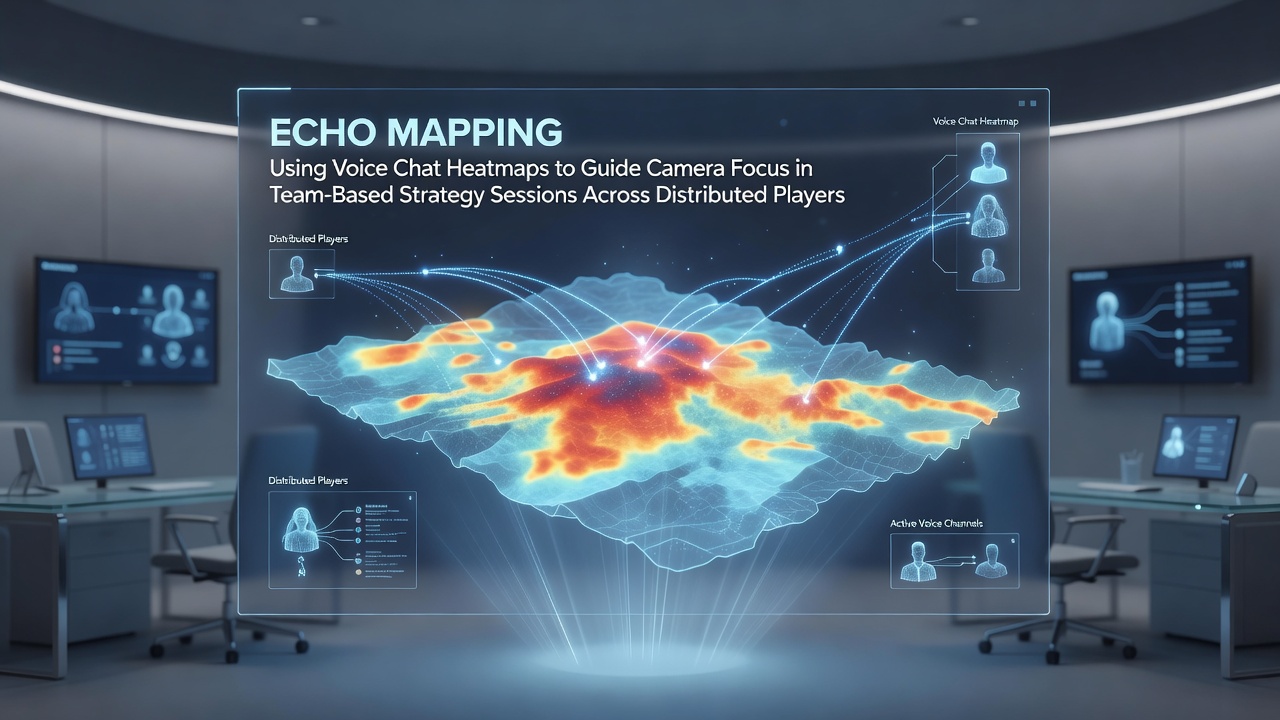
Echo Mapping: Using Voice Chat Heatmaps to Guide Camera Focus in Team-Based Strategy Sessions Across Distributed Players
Teams spread across multiple locations rely on coordinated voice communication during strategy sessions, and echo mapping converts those audio inputs into visual heatmaps that direct camera systems toward the most active discussion zones. Developers integrate microphone data from platforms like Discord or dedicated team apps to generate real-time overlays where color intensity represents speaking volume and frequency, allowing automated camera adjustments without manual intervention from a central operator.
Core Mechanics Behind Echo Mapping Systems
Audio processing algorithms analyze incoming voice streams by sampling amplitude levels at regular intervals then plotting those values onto a shared spatial grid that corresponds to player positions or discussion topics in the game environment, while spatial audio cues help distinguish overlapping conversations so the heatmap prioritizes clusters with sustained activity rather than isolated spikes. Engineers calibrate thresholds to filter background noise and ensure only relevant team chatter influences the camera path, and this setup proves especially useful in games requiring rapid shifts between multiple fronts such as real-time strategy titles or tactical shooters played by groups exceeding four participants.
Research from institutions including the Georgia Institute of Technology has examined how such audio visualization tools reduce response delays in collaborative scenarios, and data indicates that teams using heatmap-guided cameras maintain higher synchronization rates during extended matches compared to those relying solely on manual panning. The process begins with voice packet capture followed by frequency mapping, after which the system renders heat layers that fade gradually to prevent outdated information from dominating the view.
Implementation in Distributed Team Environments
Distributed players connect through low-latency networks that transmit both game state and voice data simultaneously, allowing the echo mapping software to correlate spoken commands with on-screen elements like unit movements or resource allocations. In practice one participant might call out an enemy flank while others confirm positioning, and the resulting heatmap directs the shared camera toward that sector automatically, freeing individual players to focus on their controls instead of camera management. Software updates rolled out in early 2025 expanded compatibility with cross-platform voice services, and by June 2026 several major titles incorporated native support for these features through partnership with audio middleware providers.
Observed Patterns in Strategy Session Usage
Analysts tracking usage across professional and amateur leagues note that echo mapping sees heaviest application during mid-game phases when multiple objectives compete for attention, whereas early setup stages often require less camera automation because teams spend more time on static planning. Case examples include European esports squads that integrated the technology into their training regimens, resulting in documented improvements in coordinated pushes according to internal performance logs shared with researchers at the University of Alberta. The heatmaps also serve archival purposes since session recordings retain the overlay data for post-match review, enabling coaches to identify communication bottlenecks without separate audio transcription efforts.

Hardware requirements remain modest since most modern headsets already include directional microphones, yet developers recommend dedicated audio interfaces for larger groups to minimize packet loss that could distort heatmap accuracy. Integration with existing streaming tools occurs through plugin APIs that export heatmap coordinates directly to broadcast software, letting viewers follow the same guided perspective as the team itself.
Technical Considerations and Data Handling
Privacy protocols require explicit consent from all participants before voice data enters the mapping pipeline, and systems typically anonymize individual contributions by aggregating volumes rather than attributing speech to specific users. Bandwidth demands increase modestly because heatmap generation happens client-side or on dedicated servers before transmission, and tests conducted by industry groups such as the Interactive Software Federation of Europe show average overhead stays below 15 percent of total session traffic. Edge cases arise when players switch languages mid-discussion or employ coded terminology, prompting ongoing refinements in natural language processing layers that accompany the basic amplitude tracking.
Future iterations scheduled for release after June 2026 aim to incorporate predictive elements where historical heatmap patterns help anticipate upcoming focus areas based on recurring team behaviors. Those who've implemented current versions report smoother session flow once initial calibration completes, although setup complexity varies depending on the number of concurrent voice channels in use.
Conclusion
Echo mapping continues to evolve as teams seek efficient ways to manage attention across dispersed participants, and its combination of voice analytics with camera automation addresses a specific coordination challenge in strategy gaming. Continued data collection from live deployments will likely shape refinements that further align audio visualization with gameplay demands.