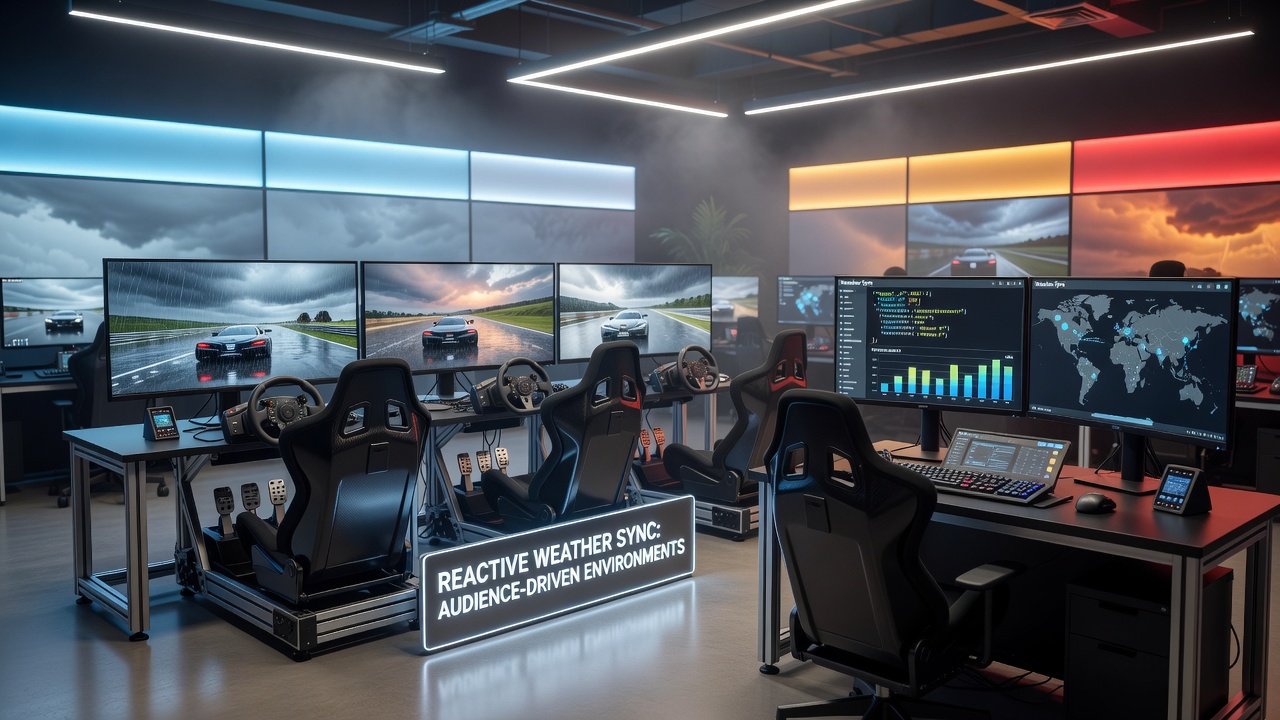
Crafting Reactive Lighting Setups That Sync with Audience-Submitted Weather Reports to Alter In-Game Environments During Endurance Races
Broadcasters have integrated audience weather submissions into dynamic lighting systems that modify virtual racing conditions in real time, and this approach connects viewer input directly to both physical studio lights and in-game shaders. Endurance events spanning multiple hours rely on these setups to maintain engagement while external data streams influence fog density, rain intensity, and ambient color temperatures across simulated tracks.Integrating Audience Weather Inputs
Participants submit local conditions through dedicated chat commands or web forms that feed into centralized databases, and these reports aggregate from multiple zip codes to generate composite weather layers for the broadcast. Developers use APIs to pull validated meteorological details such as temperature, precipitation levels, and wind speed, then map those values onto game engine parameters that adjust track surfaces and lighting conditions accordingly. Systems often cross-reference submissions against public weather services to filter outliers before applying changes, which keeps the environment consistent during long sessions that extend into July 2026 schedules.
Technical Architecture for Reactive Lighting
Hardware controllers link RGB lighting arrays to the same data pipeline that drives in-game visuals, so studio floods shift hue and brightness in sync with virtual skies. Software bridges translate weather variables into DMX signals for physical fixtures while simultaneously updating shader graphs that control reflections, particle effects, and horizon glows inside the racing simulation. Observers note that middleware layers handle latency compensation by buffering rapid weather shifts, and this prevents abrupt jumps that could disrupt immersion during extended endurance segments. Custom scripts parse incoming reports every few minutes, calculate average values across contributors, and push updates through both the lighting network and the game client without interrupting the race feed.
Implementation in Endurance Race Broadcasts
Teams running multi-hour events on titles like endurance-focused simulators have documented cases where audience weather data altered nighttime visibility by dimming track lights and adding volumetric fog when reports indicated overcast conditions from several regions. One documented workflow involved viewers from varied time zones submitting data that triggered progressive weather fronts moving across the virtual circuit, and these transitions coincided with physical light temperature changes in the streaming setup to reinforce the effect for remote audiences. Data shows that such synchronization increases retention metrics when systems maintain smooth interpolation between weather states rather than discrete jumps.
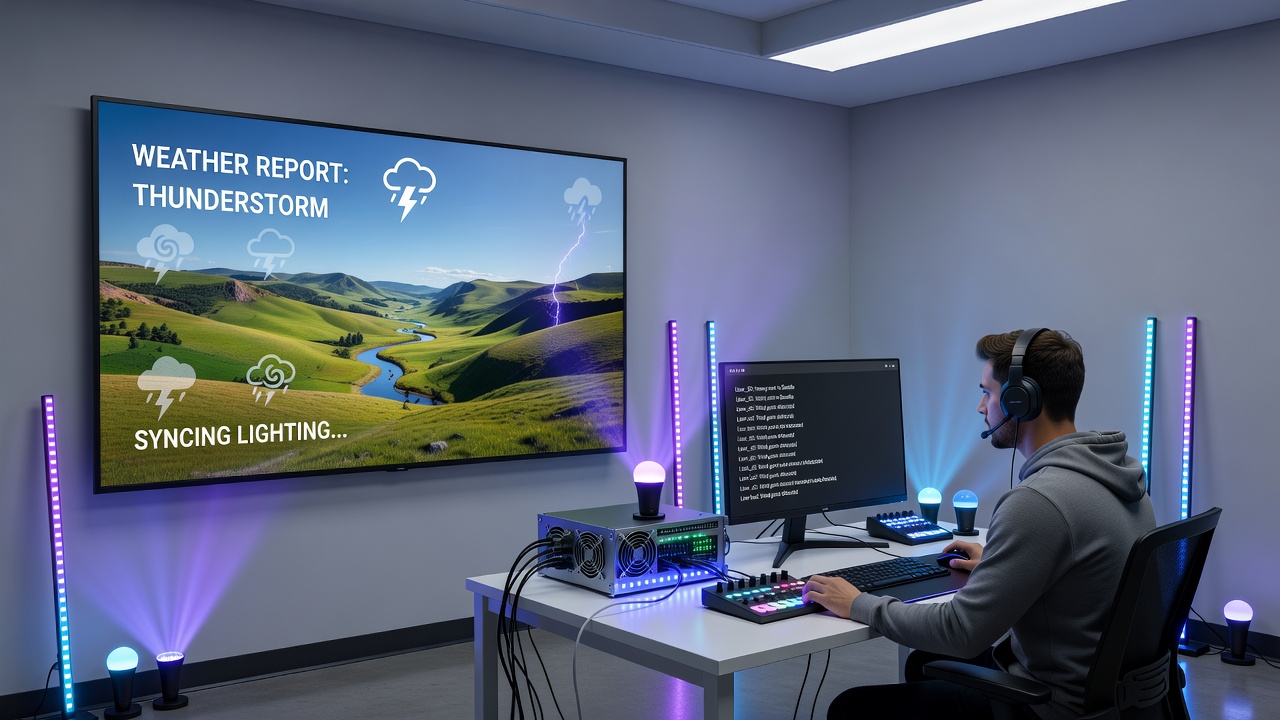
Challenges in Data Validation and Latency
Ensuring report accuracy requires automated checks against regional meteorological sources, and researchers at institutions like the University of Melbourne have explored similar crowdsourced validation methods for environmental datasets. Latency between submission and visual update remains a core concern, yet optimized pipelines using edge computing reduce delays to under two seconds in controlled tests. Broadcasters also manage conflicting reports by weighting submissions according to geographic clustering, which produces coherent weather zones instead of erratic fluctuations that might confuse viewers during critical race moments.
Future Developments and Integration Standards
Industry groups such as the Interactive Games and Entertainment Association have published guidelines on real-time data pipelines that support weather-driven modifications, and these frameworks encourage modular designs allowing new sensor inputs without full system overhauls. As endurance broadcasts expand in 2026, developers continue refining interpolation algorithms that blend multiple weather reports into gradual environmental shifts, and this keeps both physical lighting and in-game elements aligned throughout extended sessions.
Conclusion
Reactive lighting systems tied to audience weather reports now form a standard component in many endurance race productions, and the combination of validated data feeds, synchronized hardware controls, and shader adjustments creates cohesive environments that respond to collective viewer input. Continued refinement of validation protocols and latency handling supports broader adoption across different racing titles and broadcast scales.