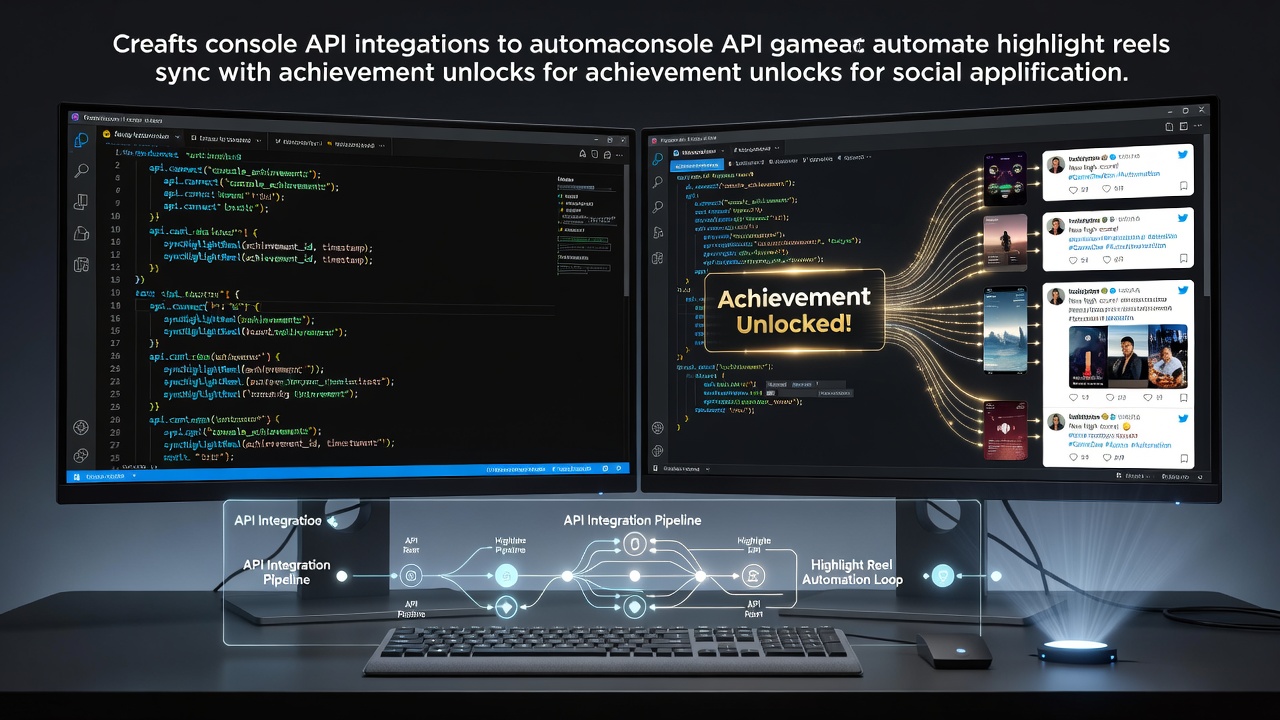
Crafting Console API Integrations to Automate Highlight Reels Synced with Achievement Unlocks for Social Amplification
Developers and broadcasters have turned to console APIs from major platforms to build automated systems that capture gameplay moments at the exact instant an achievement unlocks, then package those clips into highlight reels ready for immediate distribution across social channels. These integrations rely on real-time event listeners from services such as Xbox Live and PlayStation Network that push notifications when players hit predefined milestones, allowing third-party tools to trigger recording without manual intervention.
Core Components of Console API Connections
Official documentation from platform holders outlines how applications authenticate through OAuth flows and subscribe to achievement endpoints, which return structured data including timestamps, user identifiers, and associated media assets. Engineers combine these feeds with local capture software that buffers the preceding thirty to sixty seconds of gameplay, ensuring the full context of an unlock appears in the final reel. Data from the Xbox Live services documentation shows that event payloads include precise coordinates within a game session, which developers map to video timelines for seamless editing.
Automating Reel Assembly and Metadata Tagging
Once an unlock signal arrives, scripts written in languages such as Python or JavaScript parse the payload and instruct recording software to export a clip tagged with achievement title, game name, and player handle. Additional layers append viewer engagement prompts or overlay graphics that highlight the milestone, while metadata standards like JSON-LD prepare the file for social platform algorithms. In July 2026 several platforms expanded their event schemas to include optional fields for difficulty rating and rarity percentage, giving creators richer data points for targeted promotion without extra manual entry.
Social Amplification Pathways
Automated pipelines push finished reels to services including X, TikTok, and Instagram through their respective media upload endpoints, scheduling posts to coincide with peak audience windows derived from historical engagement analytics. Observers note that systems configured this way often see concurrent share rates increase because the content reaches networks at the moment the achievement notification itself appears in friends' feeds. Researchers at the Entertainment Software Association have tracked how synchronized timing between in-game events and social posts correlates with higher click-through rates across multiple titles released in the past two years.
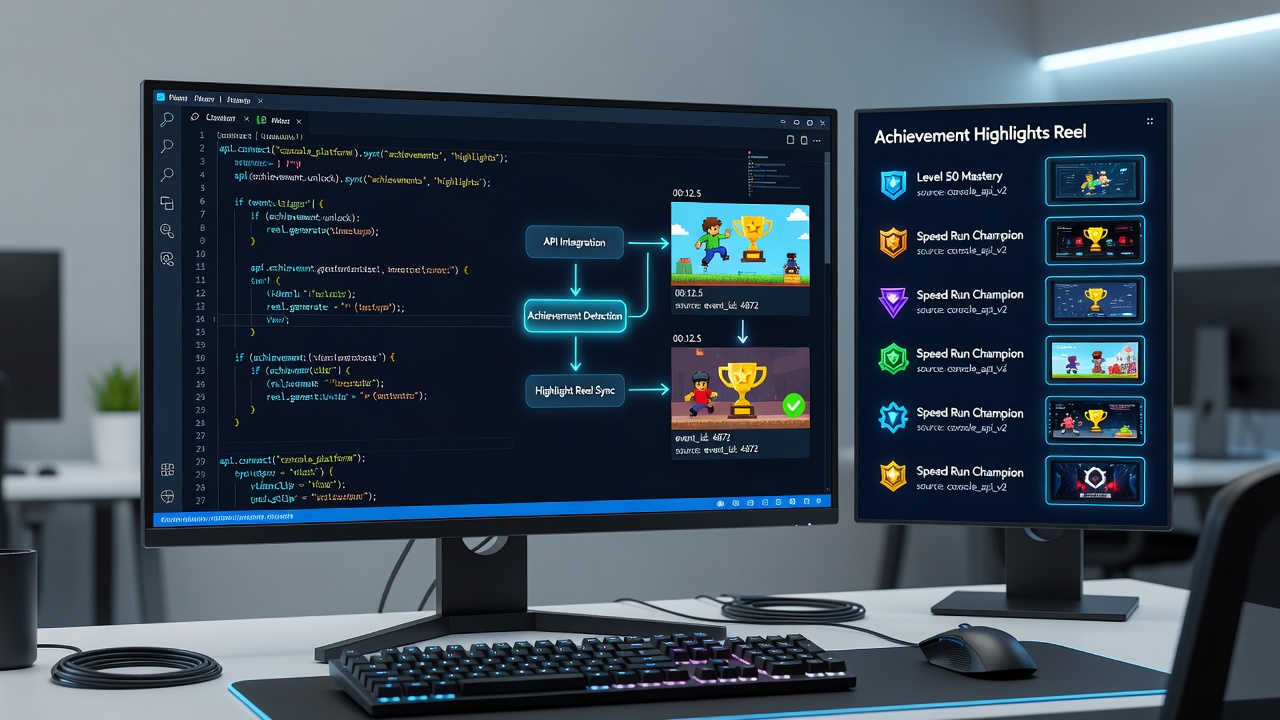
Teams building these workflows typically incorporate error handling that retries failed uploads during temporary network disruptions and logs every step for compliance audits. Some implementations add viewer-controlled variables, such as allowing chat participants to vote on which clip variant gets posted first, thereby extending interaction beyond the original broadcast window. Industry reports indicate that titles supporting cross-platform achievement syncing experience smoother integration because a single API call can cover unlocks reported from both console and PC versions of the same game.
Security and Compliance Considerations
Platform holders require that any integration handling user achievement data adheres to strict privacy rules, including explicit consent for data sharing and anonymization of non-essential identifiers before export. Certificates and token rotation schedules prevent unauthorized access, while rate-limiting headers protect backend services from overload during high-traffic events such as global release days. Those who have implemented these safeguards report fewer interruptions because the architecture isolates each stage of the pipeline, allowing individual components to fail without halting the entire process.
Future-Proofing Through Modular Design
Modular codebases let developers swap out social endpoints or add new console platforms as they emerge, since the core logic for achievement listening remains consistent across vendors. Updates rolled out in mid-2026 introduced support for extended video lengths on certain networks, prompting many teams to adjust their export parameters so reels remain under platform-specific duration caps while still conveying the full achievement context. Data shows that broadcasts using these adaptable setups maintain consistent amplification performance even when external services change their media specifications.
Conclusion
Console API integrations that link achievement unlocks directly to highlight reel creation and social distribution continue to evolve through standardized event schemas and improved authentication methods. Broadcasters who maintain these pipelines benefit from reduced manual workload and tighter alignment between in-game progress and external visibility, provided they follow the documented security practices and modular architecture patterns established by platform providers.