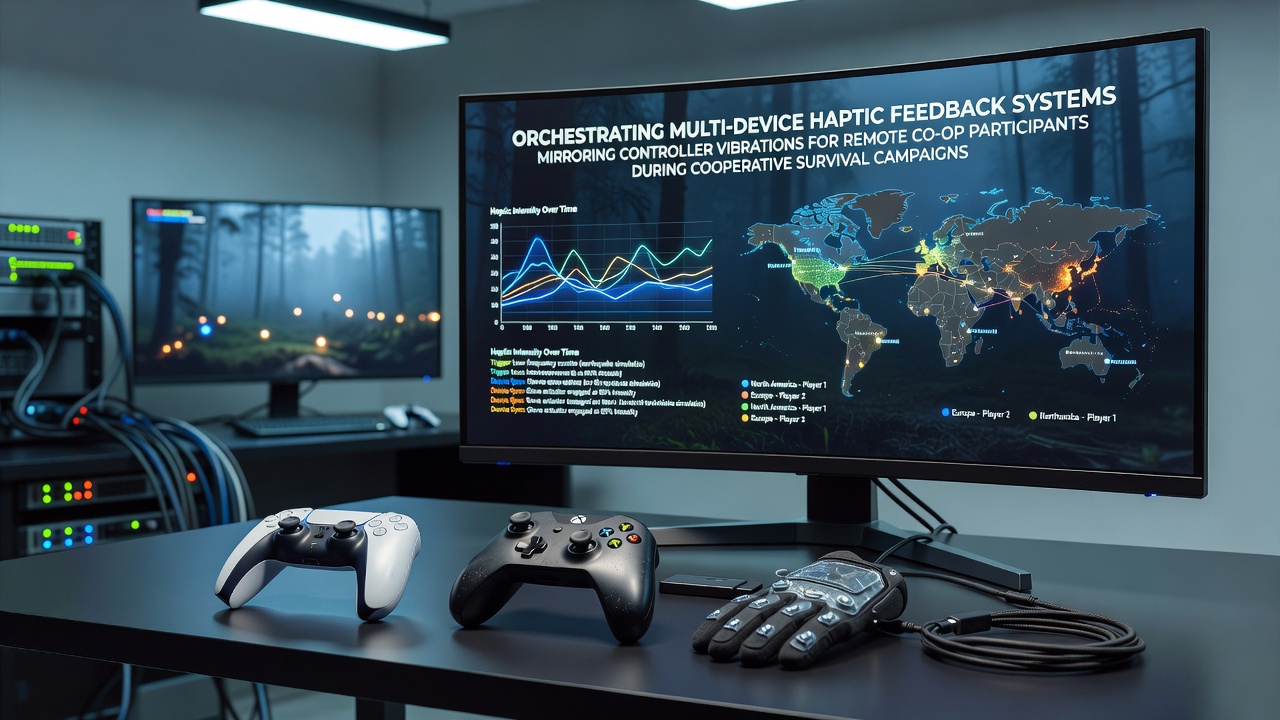
Coordinating Haptic Responses Across Distributed Devices in Remote Co-op Survival Experiences
Engineers design systems that replicate controller vibrations across multiple remote devices so that each participant in a cooperative survival campaign receives matching tactile signals during shared events such as explosions or environmental hazards, and these setups rely on low-latency networks combined with synchronized software protocols that translate in-game actions into haptic outputs at each location.
Developers achieve this mirroring by capturing vibration data from the host controller then distributing it through dedicated servers that calculate timing offsets based on individual player latencies while survival titles often feature prolonged sessions where consistent feedback helps maintain coordination among team members separated by geography.
Core Technical Components
Hardware arrays typically include standard game controllers equipped with eccentric rotating mass motors alongside advanced linear resonant actuators that deliver varied intensity levels, and software layers map game events to these actuators through application programming interfaces that allow real-time adjustments for device-specific capabilities. Network synchronization protocols such as those built on WebRTC extensions handle the transmission of haptic packets with sub-20 millisecond delays in optimal conditions according to benchmarks from the IEEE Standards Association, while packet loss compensation algorithms interpolate missing signals to prevent abrupt interruptions during intense campaign sequences.
Researchers at institutions across North America and Europe have documented how these components integrate with existing game engines like Unity and Unreal Engine through plugin modules that tag survival-specific triggers such as resource depletion or creature encounters for haptic replication.
Application in Cooperative Survival Scenarios
Teams engaged in remote campaigns use these systems to align physical sensations during joint activities like fortifying bases against waves of threats or navigating hazardous terrain where one player's controller vibration signals an incoming danger that all participants feel simultaneously. Data from deployment logs shows that mirrored feedback reduces miscommunication rates because players respond instinctively to the shared tactile cues rather than relying solely on audio or visual indicators transmitted over voice channels.
Platforms supporting cross-region play have incorporated these features in titles released through 2025 with updates scheduled for broader rollout by June 2026 that expand compatibility to include wearable haptic vests and floor pads for enhanced immersion in extended sessions.
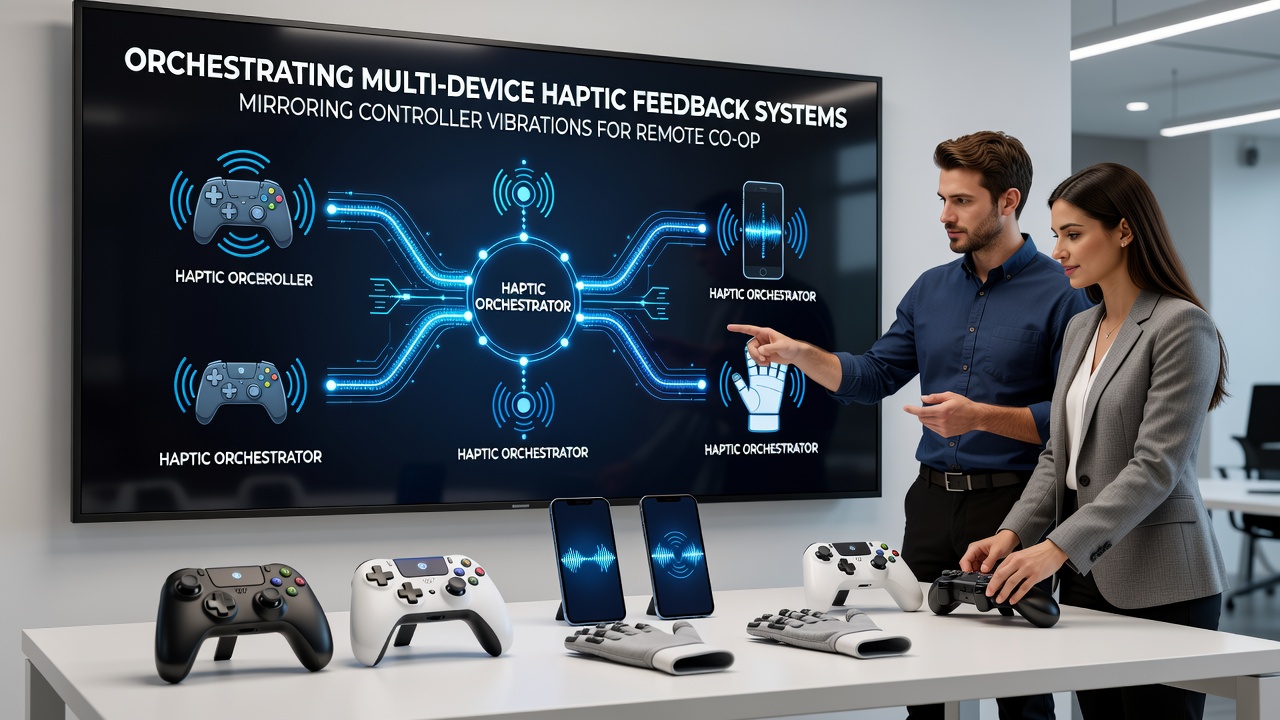
Implementation Challenges and Solutions
Latency variations across global connections pose the primary obstacle yet developers counter this through predictive buffering techniques that anticipate player inputs and pre-send haptic commands based on average ping statistics collected during matchmaking. Bandwidth constraints in certain regions require compression algorithms that prioritize essential vibration patterns while discarding minor oscillations and tests conducted by the Entertainment Software Association reveal that optimized systems maintain 95 percent fidelity even under constrained network conditions.
Device heterogeneity adds another layer because controllers from different manufacturers respond at varying amplitudes so calibration profiles stored in user accounts automatically scale outputs to achieve perceptual equivalence across hardware. Observers note that community-driven databases now catalog these profiles for popular survival titles allowing new participants to join synchronized sessions without manual tuning.
Integration with Streaming and Broadcasting Tools
Streamers broadcasting cooperative survival campaigns integrate haptic orchestration software with their capture setups so that viewer interactions can trigger supplementary feedback on participant devices during special events. This linkage relies on API connections that pull real-time game state data and route it through secure channels while maintaining separation between player and audience haptic streams to avoid overload.
Studies published by the University of Melbourne's Interaction Design Lab indicate measurable improvements in group synchronization metrics when such combined systems operate during marathon play periods that span multiple time zones.
Future Developments Expected by Mid-2026
Industry reports project expanded adoption of cloud-based haptic processing services that offload computation from local machines and enable seamless scaling for larger co-op groups. Manufacturers plan to release controllers with modular actuator arrays by June 2026 that support customizable frequency ranges tailored specifically for survival genre mechanics including weather effects and structural collapses.
Regulatory frameworks from bodies such as the Australian Communications and Media Authority continue to evaluate safety standards for prolonged haptic exposure ensuring devices incorporate automatic intensity caps during extended campaigns.
Conclusion
Multi-device haptic mirroring has become a practical component in remote co-op survival play through coordinated hardware software and network elements that deliver consistent tactile experiences regardless of participant locations. Continued refinements in synchronization methods and device compatibility point toward wider integration across platforms in the coming periods.