Charting Biometric Sync Patterns from Multiple Wearables to Modulate In-Stream Lighting Effects for Endurance Challenges
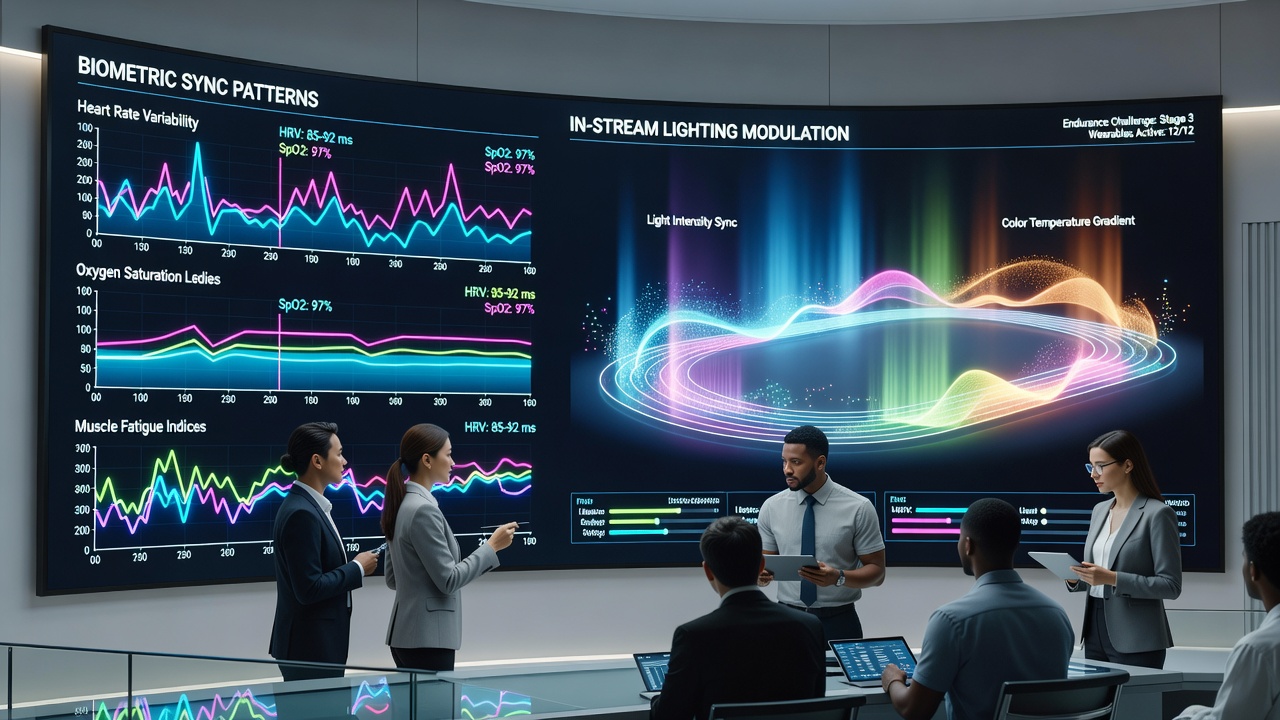
Endurance challenges in gaming broadcasts often span several hours, and creators now integrate data streams from devices such as chest straps, wrist monitors, and ring sensors to adjust ambient lighting in real time. These systems collect heart rate variability, skin conductance, and core temperature readings, then map the combined patterns onto LED arrays positioned around the streaming environment. Observers note that synchronization protocols align timestamps across hardware platforms before feeding aggregated metrics into lighting control software.
Data Collection from Distributed Sensors
Multiple manufacturers produce wearables that sample physiological signals at intervals ranging from one second to thirty seconds, and developers combine outputs through open APIs or proprietary bridges. A single session might pull continuous electrocardiogram traces from one chest-worn unit while a second device supplies galvanic skin response values, allowing algorithms to detect shifts in autonomic nervous system activity. Research indicates that cross-device calibration routines reduce drift errors to under five percent when sessions extend beyond four hours.
Pattern Recognition and Synchronization Logic
Software frameworks identify recurring sequences such as rising heart rate paired with declining skin conductance, then classify these sequences into fatigue or recovery states. Engineers implement time-series alignment techniques that correct for clock skew between devices, ensuring that a spike recorded on a wrist sensor at 14:07:22 corresponds exactly to an optical sensor reading at the same instant. Those who have studied these pipelines report that sliding-window correlations performed every ten seconds provide stable inputs for downstream lighting decisions.
Lighting Modulation Techniques
Once patterns are classified, control scripts translate states into RGB values and intensity levels for fixtures mounted behind monitors, along desk edges, and overhead. Cool white and blue tones often accompany periods of elevated sympathetic activity, whereas warmer amber shades appear during intervals of parasympathetic dominance. Pulse-width modulation cycles run at frequencies above 1 kHz to prevent visible flicker for both cameras and viewers. Data from field tests shows response latency between biometric change and visible light adjustment averaging 180 milliseconds when local processing handles the computation.
Implementation in Extended Broadcasts
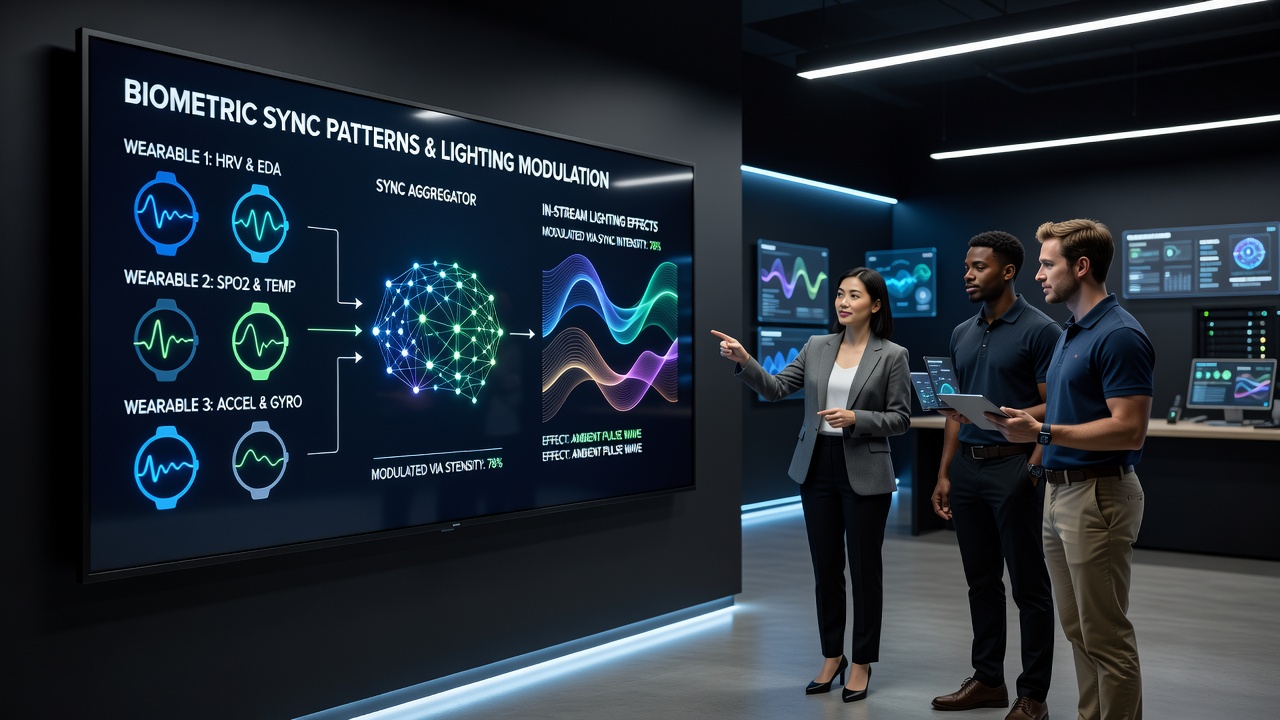
Broadcasters schedule endurance events that run through overnight windows, and the lighting system serves as a visual proxy for participant condition without requiring verbal updates. In June 2026, several North American tournaments plan to incorporate these synchronized setups as standard production elements. Integration occurs through modular nodes that accept both DMX and UDP commands, allowing lighting desks to layer biometric cues alongside pre-programmed scene changes. Participants wear redundant sensors so that signal loss from one device triggers automatic failover to the next available source.
Technical Standards and Interoperability
Industry groups have published draft specifications for biometric payload formats that include metadata fields for sensor accuracy ratings and battery status. These specifications enable third-party applications to ingest streams from devices produced in different regions without custom translation layers. European hardware vendors and Australian research teams have contributed test vectors that verify interoperability under sustained high-data-rate conditions. Engineers verify that packet loss below two percent maintains lighting continuity throughout multi-hour events.
Viewer Interpretation and Production Outcomes
Audiences observe gradual color shifts that correspond to documented physiological transitions, and production teams log these shifts alongside chat activity metrics. Studies conducted at institutions in Canada demonstrate that synchronized lighting correlates with measurable changes in viewer retention during segments exceeding ninety minutes. The same research notes that color temperature adjustments remain within ranges that preserve accurate skin-tone reproduction on broadcast cameras.
Future Refinements and Data Handling
Teams continue to refine machine-learning models that predict upcoming state changes several minutes in advance, thereby allowing preemptive lighting adjustments. Storage of raw biometric streams follows regional privacy frameworks, with anonymized aggregates shared for comparative analysis across multiple events. Observers note that these practices support iterative improvement of pattern libraries while maintaining compliance with data-protection requirements in multiple jurisdictions.
Conclusion
Systems that chart biometric synchronization across wearables and translate those patterns into lighting control now form part of established production workflows for endurance broadcasts. Continued development focuses on reducing latency, expanding sensor compatibility, and refining classification accuracy through larger datasets collected under controlled tournament conditions.