Building Layered Notification Cascades Across Social Platforms That Trigger Based on In-Game Achievement Thresholds to Boost Simultaneous Join Rates
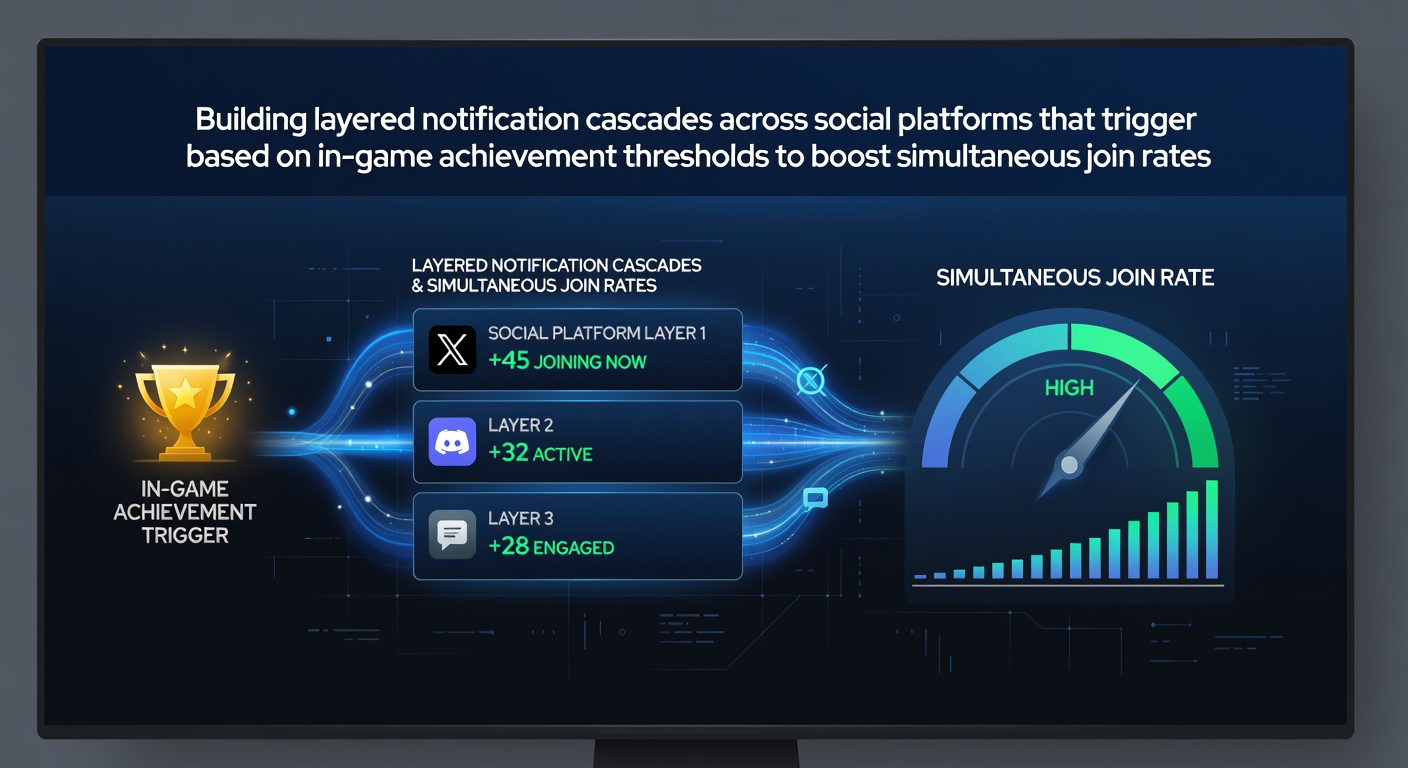
Developers and community managers construct notification cascades by connecting game telemetry systems directly to social platform APIs so that specific in-game milestones automatically generate alerts across multiple channels. These cascades operate in layers where initial triggers activate on Discord servers while secondary waves expand to Twitter and Twitch depending on participation thresholds, and the approach relies on achievement data pulled in real time from game servers to determine when each layer activates. Observers note that this structure encourages groups to reach join points together rather than individually because the notifications scale visibility as more players hit the required milestones.
Core Mechanics of Threshold-Based Triggers
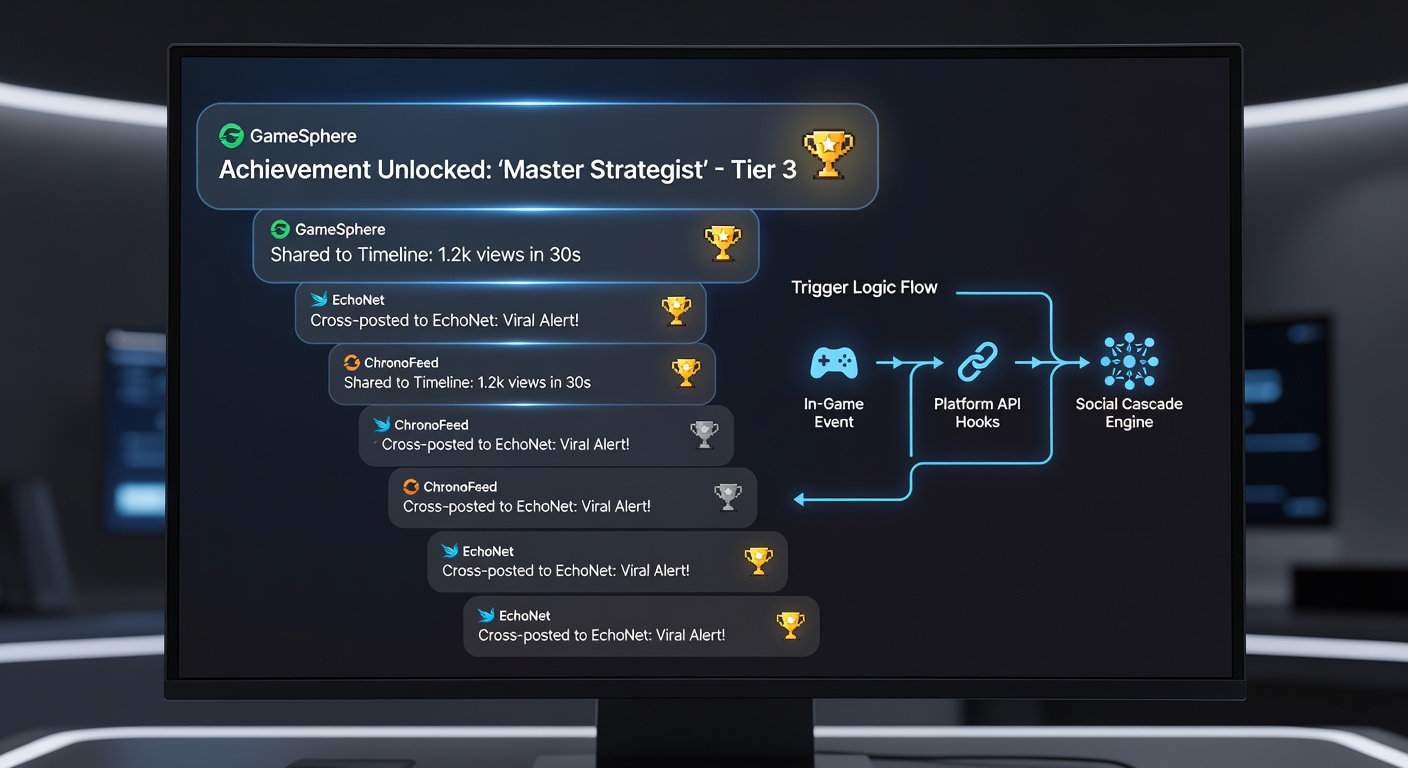
Game engines record achievement data such as kill counts, level completions, or objective captures, then feed those metrics into middleware that evaluates whether predefined thresholds have been met before dispatching notifications. When a threshold activates, the first layer sends a message to a dedicated Discord channel that includes the current progress count and a join link, while subsequent layers monitor the response rate and escalate to broader platforms if the simultaneous participation goal remains unmet after a set interval. Researchers at institutions including the University of Waterloo have documented similar automated coordination patterns in multiplayer environments where timing of alerts correlates with higher group assembly rates during evening peak hours.
Platforms handle these triggers differently because Discord supports webhook integrations that update in seconds, whereas Twitter requires rate-limited API calls that queue messages to avoid spam filters, and Twitch chat bots receive the same data streams to post announcements in live channels. The layering prevents notification fatigue by spacing releases and by conditioning later waves on actual engagement metrics pulled from the preceding platform, which means a cascade can halt if enough players have already joined the session.
Integration Patterns Observed in 2026
By June 2026 multiple titles updated their achievement systems to expose public telemetry endpoints that third-party services use to build these cascades without requiring direct access to player accounts. Data from the Entertainment Software Association shows that games incorporating cross-platform notification layers recorded measurable increases in concurrent logins during scheduled events, especially when thresholds aligned with global time zones that overlap in the early evening across North America and Europe. Community tools now parse these endpoints to create conditional rules, such as sending an initial alert after 25 players complete a raid objective and then escalating only if the count does not reach 50 within fifteen minutes.
One documented implementation ties raid completion counters in an action MMO to both a private Discord role assignment and a public Twitter thread that updates with live participant numbers, while the same data stream feeds a Twitch overlay that displays the remaining slots until the instance fills. The system pauses further notifications once capacity is reached, which reduces redundant posts and maintains platform compliance. Those who maintain these setups report that the key variable remains the accuracy of the achievement telemetry because false positives can trigger premature cascades that dissipate viewer interest before the actual session begins.
Platform-Specific Considerations
Discord servers benefit from role-based gating that grants access only after the first threshold is crossed, which creates an incentive for early joiners to recruit others and push the count higher. Twitter threads, by contrast, function as public visibility layers that surface when internal channels show slower uptake, and the format allows threaded replies that keep conversation history attached to the original achievement announcement. Twitch integrations often combine chat messages with channel-point redemptions that reward viewers for sharing the notification link, thereby extending the cascade reach without additional developer intervention.
Regulatory guidance from bodies such as the Australian Competition and Consumer Commission emphasizes transparent data handling when achievement metrics cross into social platforms, requiring clear consent flows so players understand how their progress data may appear in external feeds. Compliance teams therefore embed opt-out toggles inside game menus that disable the telemetry export while still allowing personal achievement tracking, which keeps the cascades functional for consenting users without affecting overall system performance.
Measurement and Adjustment Loops
Analytics dashboards track the conversion from notification receipt to actual game login, segmenting results by platform and by time elapsed between layers. When conversion drops below expected benchmarks the middleware adjusts the escalation delay or modifies the threshold values for the next event cycle, creating a feedback loop that refines performance over successive sessions. Figures released by the Interactive Software Federation of Europe indicate that titles using iterative threshold tuning achieved higher simultaneous join consistency during recurring weekly events compared with static notification schedules.
Teams also monitor platform-specific engagement signals such as Discord reaction counts and Twitter impression data to decide whether a cascade should expand further or conclude. In practice the entire process runs through scheduled cloud functions that poll the game telemetry endpoint every thirty seconds during active windows, ensuring that threshold checks remain current without overloading either the game servers or the social APIs.
Conclusion
Layered notification cascades function as coordinated alert systems that scale visibility across platforms according to verified in-game progress, and their effectiveness depends on accurate telemetry, platform-compliant delivery methods, and iterative tuning based on observed join metrics. As more titles expose public achievement data in 2026, the technical patterns for building these cascades continue to standardize around webhook triggers, conditional escalation rules, and consent mechanisms that respect both player privacy and platform policies. The result is a repeatable framework that aligns player actions into simultaneous sessions without manual coordination at each step.