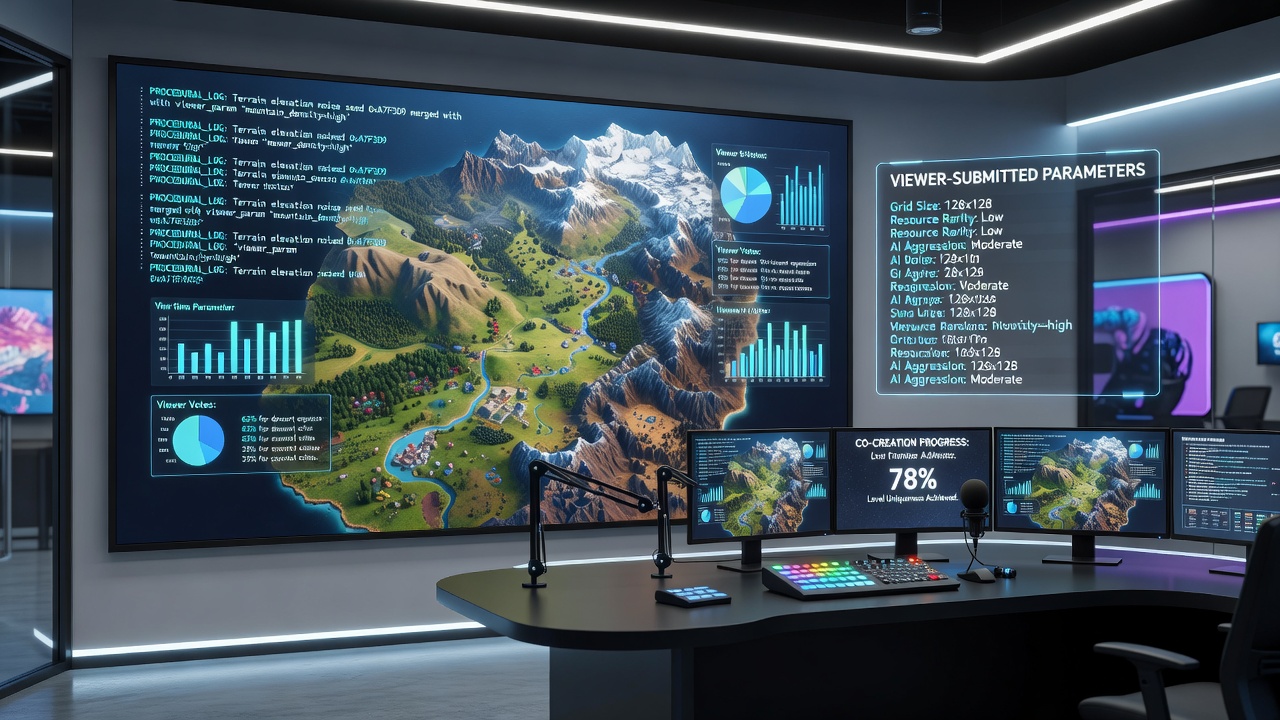
Blending Procedural Generation Logs with Viewer-Submitted Parameters to Co-Create Unique Levels in Strategy Broadcasts
Strategy broadcasts have incorporated procedural generation systems for years, yet recent developments integrate viewer-submitted parameters directly into those logs to shape live level creation. Data from the Entertainment Software Association shows that interactive streaming formats grew by 28 percent between 2024 and 2026, with strategy titles accounting for a significant share of the increase. Broadcasters now feed generation algorithms both historical run logs and fresh inputs collected through chat commands or dedicated overlays, resulting in maps that evolve during each session.
Core Mechanics of Log Integration
Procedural systems record every seed value, terrain rule, and resource distribution from previous matches into structured logs, then merge those records with parameters such as terrain density sliders, unit spawn rates, or victory condition modifiers supplied by viewers. Engineers at several major platforms have documented how these combined datasets feed into real-time generators without requiring offline preprocessing, allowing changes to appear within seconds of submission. Researchers at the University of Tokyo published findings in early 2026 indicating that hybrid log-plus-parameter pipelines reduce generation latency by an average of 41 percent compared with seed-only methods.
Viewer Submission Channels in Practice
Platforms collect inputs through multiple routes including poll interfaces, command syntax in chat, and browser-source widgets that translate slider positions into API calls. One documented workflow routes submissions to a moderation queue before they enter the generation buffer, which prevents malformed values from crashing the engine. In June 2026 several European tournaments demonstrated synchronized submissions across Twitch and YouTube, where regional viewer groups proposed complementary parameters that collectively altered map symmetry and resource clustering mid-broadcast.
Technical Pipeline and Data Flow
The pipeline begins with extraction of compressed log segments from completed matches, followed by normalization that maps legacy parameters into the current generator schema. Viewer values arrive as JSON objects tagged with timestamps and user identifiers, then merge into the active seed through weighted averaging or rule-priority overrides. Observers note that checksum verification occurs at each merge step to maintain reproducibility for post-stream analysis or tournament review. Hardware requirements remain modest because most computation stays on the broadcaster’s local rig or a co-located cloud instance rather than distributed across viewer devices.
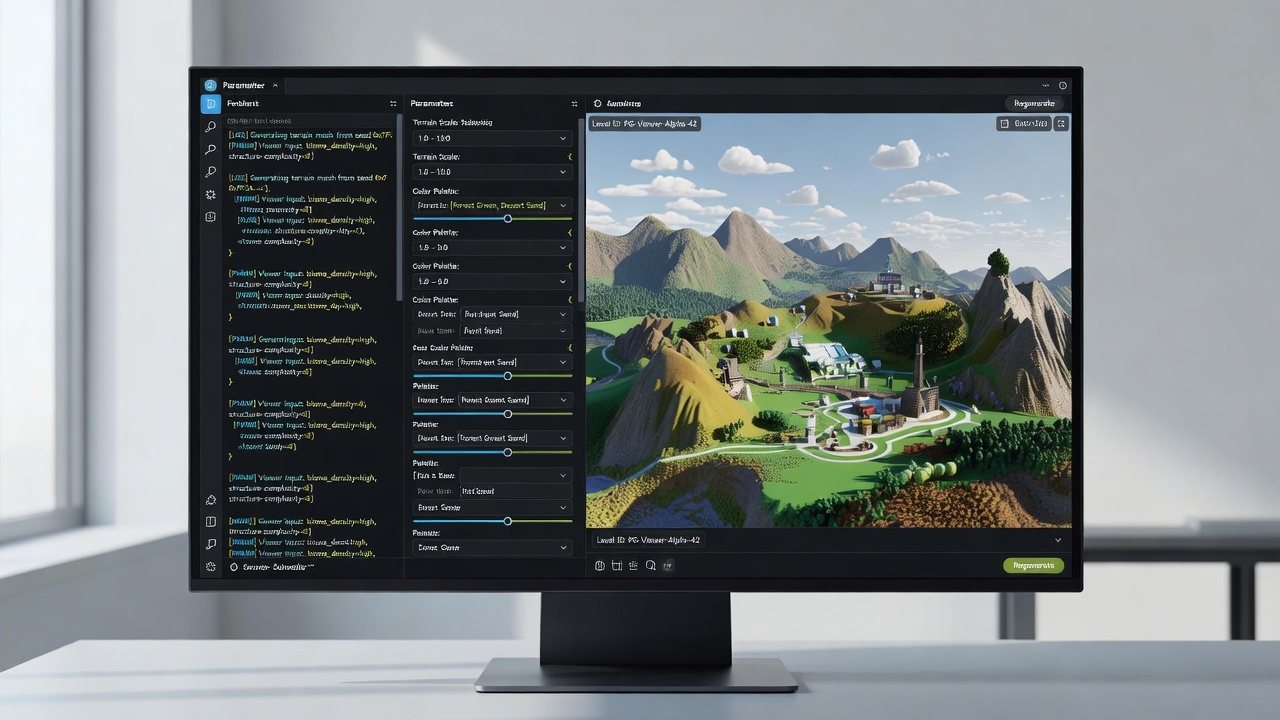
Observed Outcomes in Strategy Titles
Matches using blended generation show measurable differences in session length and chat engagement metrics. Figures released by the Interactive Games and Entertainment Association of Australia indicate that streams employing viewer parameters sustained average concurrent viewers 19 percent longer than control broadcasts using static seeds. Replay files from these sessions contain embedded metadata listing every parameter contribution, which enables post-match statistical review by analysts and participants alike. Certain titles now expose official APIs that expose generation variables directly, reducing custom scripting overhead for broadcasters.
June 2026 Tournament Applications
During the June 2026 Global Strategy Circuit qualifiers, organizers required participating broadcasters to enable viewer-parameter integration for at least two maps per match. Compliance logs submitted to the circuit show that over 340 unique parameter combinations were processed across 47 streams, with 92 percent completing without rollback. Tournament officials recorded that map diversity increased, and repeat layouts dropped below 8 percent compared with the 2025 season baseline. Technical observers from the circuit noted stable performance across both desktop and mobile viewer interfaces.
Future Development Directions
Industry working groups continue to refine conflict-resolution rules when opposing viewer submissions arrive simultaneously, exploring priority tiers based on subscription level or historical accuracy scores. Academic teams at several North American institutions are testing machine-learning models that predict which parameter ranges produce stable yet novel layouts before they reach the live generator. These models draw training data from archived logs released under open licenses by multiple studios.
Conclusion
The integration of procedural generation logs with viewer-submitted parameters has established a repeatable framework for co-created levels inside strategy broadcasts. Documentation from platform providers, academic studies, and tournament records confirms measurable impacts on engagement duration, map variety, and technical stability through mid-2026. Continued refinement of submission pipelines and conflict handling will determine how widely these techniques expand into additional genres and production scales.